Birdr

Yellow-bellied Sapsucker vs Western Spindalis

Sphyrapicus varius versus Spindalis zena

Play a quiz with Yellow-bellied Sapsucker and Western Spindalis
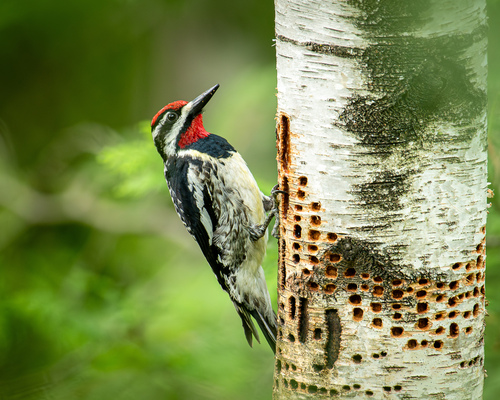
Yellow-bellied Sapsucker (Sphyrapicus varius) Yellow-bellied Sapsucker
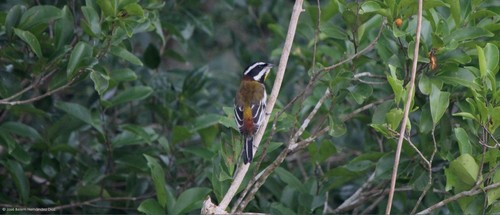
Western Spindalis (Spindalis zena) Western Spindalis

Media

Loading…

In short

The Yellow-bellied Sapsucker and Western Spindalis are distinct in both appearance and habitat. The sapsucker is a woodpecker with a distinctive red crown and throat, while the spindalis is a colorful songbird with striking black and white facial markings and a green back. They occupy different ecological niches, with the sapsucker found in North American forests and the spindalis in the Caribbean.

Identification tips

  1. Location: Check the geographic location; sapsuckers are found in North America, while spindalis are Caribbean residents. 2. Head Markings: Look for the red crown and throat on the sapsucker versus the black and white facial pattern on the spindalis. 3. Behavior: Observe behavior; sapsuckers drill sap wells, while spindalis forage for fruit. 4. Plumage: Note the yellowish belly of the sapsucker compared to the colorful breast of the male spindalis.

Size

The Yellow-bellied Sapsucker is generally larger and more robust, typical of woodpeckers, while the Western Spindalis is smaller and more slender, resembling a typical songbird.

Plumage

Yellow-bellied Sapsuckers have a red crown and throat, with a black and white striped face and a yellowish belly. In contrast, Western Spindalis males have a striking black and white face, a green back, and an orange or yellow breast, while females are duller with more muted colors.

Behaviour

Yellow-bellied Sapsuckers are known for their habit of drilling sap wells in trees and are often seen clinging to tree trunks. Western Spindalis are more likely to be seen foraging in the canopy for fruits and insects.

Habitat

Yellow-bellied Sapsuckers are typically found in deciduous and mixed forests across eastern North America. Western Spindalis inhabit the Caribbean, often in gardens, plantations, and forest edges.

Voice

Yellow-bellied Sapsuckers have a distinctive, irregular drumming pattern and a mewing call. Western Spindalis have a varied song with a series of whistles and chirps.

Submit a better description

Use the same sections as the comparison. Your text is published immediately.

The Yellow-bellied Sapsucker and Western Spindalis are distinct in both appearance and habitat. The sapsucker is a woodpecker with a distinctive red crown and throat, while the spindalis is a colorful songbird with striking black and white facial markings and a green back. They occupy different ecological niches, with the sapsucker found in North American forests and the spindalis in the Caribbean.

  1. Location: Check the geographic location; sapsuckers are found in North America, while spindalis are Caribbean residents. 2. Head Markings: Look for the red crown and throat on the sapsucker versus the black and white facial pattern on the spindalis. 3. Behavior: Observe behavior; sapsuckers drill sap wells, while spindalis forage for fruit. 4. Plumage: Note the yellowish belly of the sapsucker compared to the colorful breast of the male spindalis.

The Yellow-bellied Sapsucker is generally larger and more robust, typical of woodpeckers, while the Western Spindalis is smaller and more slender, resembling a typical songbird.

Yellow-bellied Sapsuckers have a red crown and throat, with a black and white striped face and a yellowish belly. In contrast, Western Spindalis males have a striking black and white face, a green back, and an orange or yellow breast, while females are duller with more muted colors.

Yellow-bellied Sapsuckers are known for their habit of drilling sap wells in trees and are often seen clinging to tree trunks. Western Spindalis are more likely to be seen foraging in the canopy for fruits and insects.

Yellow-bellied Sapsuckers are typically found in deciduous and mixed forests across eastern North America. Western Spindalis inhabit the Caribbean, often in gardens, plantations, and forest edges.

Yellow-bellied Sapsuckers have a distinctive, irregular drumming pattern and a mewing call. Western Spindalis have a varied song with a series of whistles and chirps.

Discard your changes?

You have unsaved edits. If you leave now, those changes will be lost.

Yellow-bellied Sapsucker · Western Spindalis · My Tricky Birds