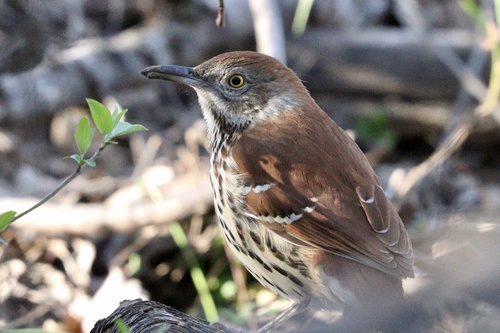
Yellow-billed Cuckoo vs Brown Thrasher
Coccyzus americanus versus Toxostoma rufum
Play a quiz with Yellow-billed Cuckoo and Brown Thrasher
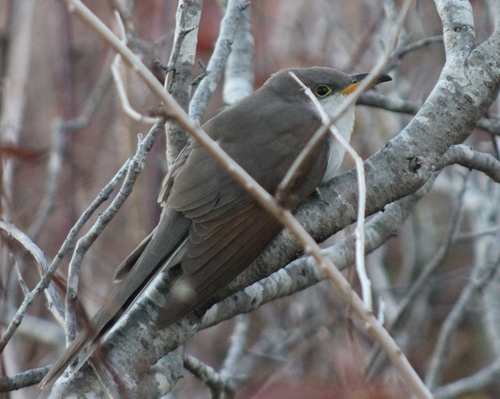
Yellow-billed Cuckoo
Brown Thrasher
In short
The Yellow-billed Cuckoo and the Brown Thrasher can be distinguished by their bills and behavior. The Yellow-billed Cuckoo has a distinctive yellow lower mandible, while the Brown Thrasher has a long, slightly curved bill. Behaviorally, the cuckoo is more arboreal, whereas the thrasher is often seen foraging on the ground.
Identification tips
1. Bill Color: Look for the yellow lower mandible of the Yellow-billed Cuckoo. 2. Plumage: Note the plain grayish-brown back of the cuckoo versus the rufous upperparts and streaked underparts of the thrasher. 3. Behavior: Observe the cuckoo's preference for staying in trees compared to the thrasher's ground foraging habits. 4. Habitat: Consider the habitat; cuckoos are more likely in dense woodlands, while thrashers are in open, shrubby areas. 5. Vocalization: Listen for the cuckoo's slow call versus the thrasher's complex song.
Size
Both species are similar in size, but the Yellow-billed Cuckoo is generally more slender, while the Brown Thrasher appears bulkier due to its heavier body and longer tail.
Plumage
The Yellow-billed Cuckoo has a plain grayish-brown back and white underparts, with rufous in the wings. The Brown Thrasher is more striking with its rich rufous upperparts and heavily streaked underparts.
Behaviour
Yellow-billed Cuckoos are more arboreal and secretive, often staying hidden in foliage. Brown Thrashers are more terrestrial, frequently seen foraging on the ground and using their long legs to scratch in leaf litter.
Habitat
Yellow-billed Cuckoos prefer deciduous woodlands and riparian areas, while Brown Thrashers are found in thickets, hedgerows, and forest edges, often in more open habitats.
Voice
The Yellow-billed Cuckoo has a distinctive, slow 'kowlp' call, while the Brown Thrasher is known for its varied and complex song, often mimicking other birds.