Yellow Bunting vs Chestnut Bunting
Emberiza sulphurata versus Emberiza rutila
Play a quiz with Yellow Bunting and Chestnut Bunting
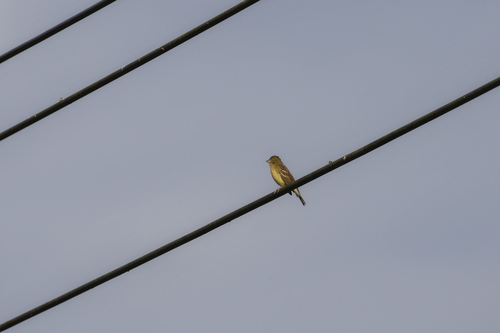
Yellow Bunting
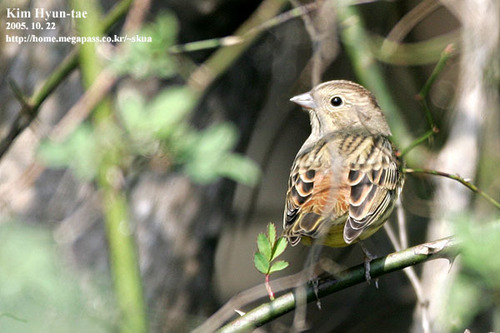
Chestnut Bunting
In short
The most reliable field mark to distinguish between the Yellow Bunting and the Chestnut Bunting is the head coloration: Yellow Bunting has a bright yellow head, while Chestnut Bunting features a more chestnut or rufous-toned head. Both species belong to the Old World Buntings and share similar structures, but their plumage differences are key in identification.
Identification tips
- Look for the head color: Yellow Bunting has a bright yellow head, while Chestnut Bunting has a chestnut or rufous head. 2. Check the underparts: Yellow Bunting is more uniformly yellow, whereas Chestnut Bunting may show more chestnut tones. 3. Consider the habitat: Yellow Bunting is more likely in open woodlands, while Chestnut Bunting prefers shrubby areas. 4. Be cautious with females and immatures, as they can be more challenging to separate based on plumage alone.
Size
Both species are similar in size, typical of small buntings, with no significant differences in structure or proportions.
Plumage
Yellow Bunting males have a bright yellow head and underparts, while Chestnut Bunting males display a chestnut or rufous head and upperparts. Females and immatures of both species are more subdued, but Yellow Bunting tends to have a more uniform yellowish tone, whereas Chestnut Bunting females and immatures show more brownish or chestnut hues.
Behaviour
Both species exhibit typical bunting behavior, such as foraging on the ground or in low vegetation, and are often seen in small flocks outside the breeding season.
Habitat
Yellow Bunting is often found in open woodlands and forest edges, while Chestnut Bunting prefers more shrubby or bushy areas, though there is overlap in their habitats during migration.
Voice
Vocalizations are not the most reliable field marks for these species, as both have typical bunting calls and songs that can be difficult to distinguish without experience.