Birdr

Yellow-green Tyrannulet vs Mottle-cheeked Tyrannulet

Phylloscartes flavovirens versus Phylloscartes ventralis

Play a quiz with Yellow-green Tyrannulet and Mottle-cheeked Tyrannulet
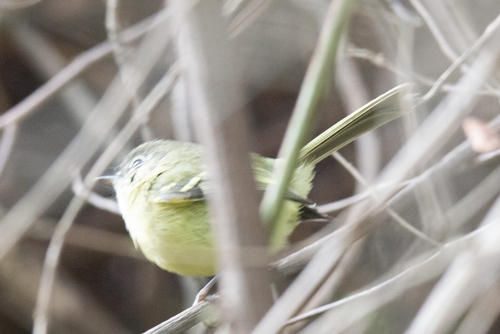
Yellow-green Tyrannulet (Phylloscartes flavovirens) Yellow-green Tyrannulet
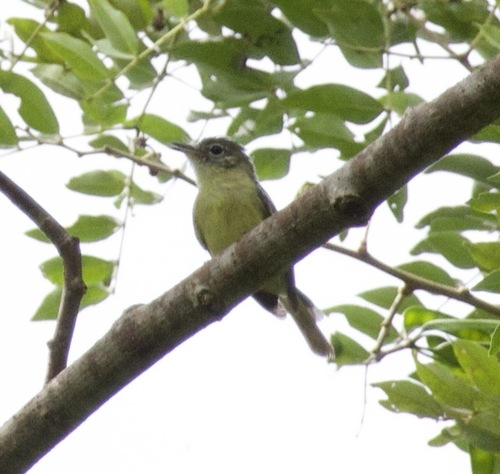
Mottle-cheeked Tyrannulet (Phylloscartes ventralis) Mottle-cheeked Tyrannulet

Media

Loading…

In short

The Yellow-green Tyrannulet and Mottle-cheeked Tyrannulet are both small, active flycatchers often found in mixed-species flocks. The most reliable field mark is the mottled cheeks of the Mottle-cheeked Tyrannulet, which are absent in the Yellow-green Tyrannulet. Both species share a similar olive-green plumage but differ in habitat preferences and altitudinal range.

Identification tips

  1. Look for mottled cheeks on the Mottle-cheeked Tyrannulet. 2. Observe the habitat: Mottle-cheeked is found at higher altitudes. 3. Note the behavior: Mottle-cheeked perches horizontally with a slightly cocked tail.

Size

Both species are small, similar in size, typical of the Phylloscartes genus.

Plumage

Yellow-green Tyrannulet is primarily olive-green above with no distinct facial markings, while the Mottle-cheeked Tyrannulet has prominent white markings on the tertials and mottled cheeks.

Behaviour

Both species are active foragers, often joining mixed-species flocks. The Mottle-cheeked Tyrannulet perches horizontally and holds its tail slightly cocked.

Habitat

Yellow-green Tyrannulet is mainly found in the forest canopy, while Mottle-cheeked Tyrannulet inhabits a broader range of forest habitats from 1000–2200 m.

Submit a better description

Use the same sections as the comparison. Your text is published immediately.

The Yellow-green Tyrannulet and Mottle-cheeked Tyrannulet are both small, active flycatchers often found in mixed-species flocks. The most reliable field mark is the mottled cheeks of the Mottle-cheeked Tyrannulet, which are absent in the Yellow-green Tyrannulet. Both species share a similar olive-green plumage but differ in habitat preferences and altitudinal range.

  1. Look for mottled cheeks on the Mottle-cheeked Tyrannulet. 2. Observe the habitat: Mottle-cheeked is found at higher altitudes. 3. Note the behavior: Mottle-cheeked perches horizontally with a slightly cocked tail.

Both species are small, similar in size, typical of the Phylloscartes genus.

Yellow-green Tyrannulet is primarily olive-green above with no distinct facial markings, while the Mottle-cheeked Tyrannulet has prominent white markings on the tertials and mottled cheeks.

Both species are active foragers, often joining mixed-species flocks. The Mottle-cheeked Tyrannulet perches horizontally and holds its tail slightly cocked.

Yellow-green Tyrannulet is mainly found in the forest canopy, while Mottle-cheeked Tyrannulet inhabits a broader range of forest habitats from 1000–2200 m.

Discard your changes?

You have unsaved edits. If you leave now, those changes will be lost.

Yellow-green Tyrannulet · Mottle-cheeked Tyrannulet · My Tricky Birds