Birdr

Yellow-legged Gull vs Glaucous Gull

Larus michahellis versus Larus hyperboreus

Play a quiz with Yellow-legged Gull and Glaucous Gull
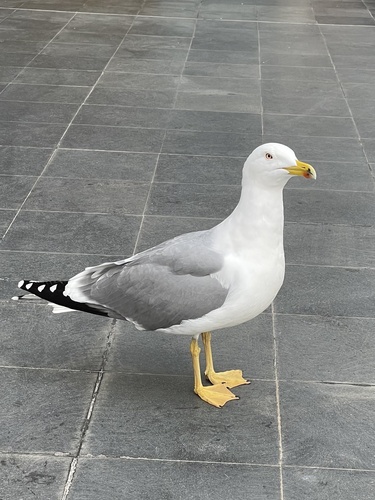
Yellow-legged Gull (Larus michahellis) Yellow-legged Gull
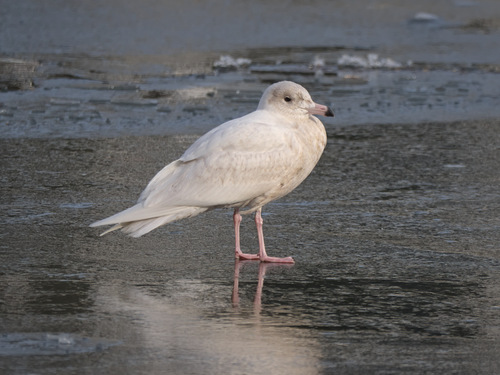
Glaucous Gull (Larus hyperboreus) Glaucous Gull

Media

Loading…

In short

The Yellow-legged Gull and Glaucous Gull can be distinguished by their leg color and overall plumage tone. The Yellow-legged Gull has yellow legs and a darker mantle, while the Glaucous Gull has pink legs and a pale, almost white plumage. These differences are most noticeable in adult birds.

Identification tips

  1. Leg Color: Look for yellow legs in Yellow-legged Gulls and pink legs in Glaucous Gulls. 2. Plumage Tone: Note the darker gray mantle in Yellow-legged Gulls versus the pale, almost white plumage of Glaucous Gulls. 3. Wing Tips: Check for black wingtips in Yellow-legged Gulls; Glaucous Gulls have white wingtips. 4. Location: Consider the habitat; Yellow-legged Gulls are more common in southern Europe, while Glaucous Gulls are found in Arctic regions.

Size

Both species are large gulls, but the Glaucous Gull is generally bulkier and larger than the Yellow-legged Gull.

Plumage

The Yellow-legged Gull has a medium-gray mantle and yellow legs, while the Glaucous Gull is very pale with a whitish mantle and pink legs. The Glaucous Gull lacks black wingtips, which are present in the Yellow-legged Gull.

Behaviour

Both species are opportunistic feeders, often seen scavenging, but the Glaucous Gull is more likely to be found in Arctic regions.

Habitat

Yellow-legged Gulls are often found in coastal and urban areas in southern Europe, while Glaucous Gulls prefer Arctic and sub-Arctic regions, often nesting on tundra and coastal cliffs.

Voice

Vocalizations are not a reliable distinguishing feature between these two species.

Submit a better description

Use the same sections as the comparison. Your text is published immediately.

The Yellow-legged Gull and Glaucous Gull can be distinguished by their leg color and overall plumage tone. The Yellow-legged Gull has yellow legs and a darker mantle, while the Glaucous Gull has pink legs and a pale, almost white plumage. These differences are most noticeable in adult birds.

  1. Leg Color: Look for yellow legs in Yellow-legged Gulls and pink legs in Glaucous Gulls. 2. Plumage Tone: Note the darker gray mantle in Yellow-legged Gulls versus the pale, almost white plumage of Glaucous Gulls. 3. Wing Tips: Check for black wingtips in Yellow-legged Gulls; Glaucous Gulls have white wingtips. 4. Location: Consider the habitat; Yellow-legged Gulls are more common in southern Europe, while Glaucous Gulls are found in Arctic regions.

Both species are large gulls, but the Glaucous Gull is generally bulkier and larger than the Yellow-legged Gull.

The Yellow-legged Gull has a medium-gray mantle and yellow legs, while the Glaucous Gull is very pale with a whitish mantle and pink legs. The Glaucous Gull lacks black wingtips, which are present in the Yellow-legged Gull.

Both species are opportunistic feeders, often seen scavenging, but the Glaucous Gull is more likely to be found in Arctic regions.

Yellow-legged Gulls are often found in coastal and urban areas in southern Europe, while Glaucous Gulls prefer Arctic and sub-Arctic regions, often nesting on tundra and coastal cliffs.

Vocalizations are not a reliable distinguishing feature between these two species.

Discard your changes?

You have unsaved edits. If you leave now, those changes will be lost.

Yellow-legged Gull · Glaucous Gull · My Tricky Birds