
Birdr

Yellow-legged Gull vs Lesser Black-backed Gull

Larus michahellis versus Larus fuscus

Play a quiz with Yellow-legged Gull and Lesser Black-backed Gull
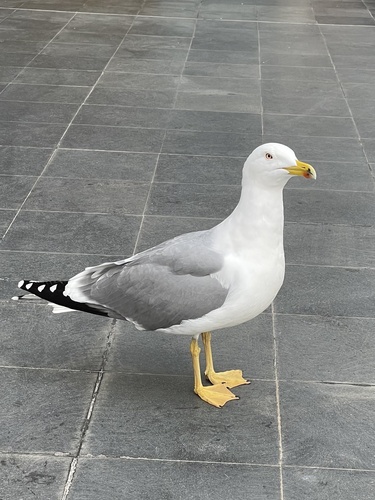
Yellow-legged Gull (Larus michahellis) Yellow-legged Gull
Lesser Black-backed Gull (Larus fuscus) Lesser Black-backed Gull

Media

Loading…

In short

The most reliable field mark to separate Yellow-legged Gull from Lesser Black-backed Gull is the mantle and upperwing color in adults: Yellow-legged Gull has a medium grey back, darker than Herring Gull but paler than Lesser Black-backed, while Lesser Black-backed Gull shows a distinctly darker, almost blackish-grey back and upperwings. In immatures, focus on the wing and tail pattern: Yellow-legged Gull first-years have a paler head and underparts, a well-defined black tail band, and dark flight feathers, while Lesser Black-backed first-years are more uniformly dark and scaly above, with solidly dark tertials. Both species have yellow legs as adults, but leg color in immatures is variable and not always reliable. Structure and size overlap, but Yellow-legged is on average slightly bulkier. Always check multiple features, especially in non-adult plumages.

Identification tips

  1. Mantle/Back Color (Adults): In side-by-side views, Yellow-legged Gull has a medium grey back, darker than Herring Gull but paler than Lesser Black-backed, which is distinctly dark grey to blackish. Works best in good light and with direct comparison.
  2. Wing and Tail Pattern (Juvenile/First-year): Yellow-legged first-years have a paler head and underparts, a well-defined black tail band, and dark flight feathers. Lesser Black-backed first-years are more uniformly dark and scaly above, with solidly dark tertials and a neat, contrasting wing pattern. Use this when observing birds in flight or at rest.
  3. Leg Color (Adults): Both species have yellow legs as adults, but Yellow-legged's are often brighter. In immatures, leg color is variable and not reliable.
  4. Head Color (Autumn/Winter): Yellow-legged is whiter-headed in autumn, while Lesser Black-backed often shows a greyer head in winter. This is subtle and best used in combination with other marks.
  5. Bill Pattern (Immatures): Yellow-legged second-winter birds retain black bill tips, while Lesser Black-backed may show a more uniformly dark bill in first-years.
  6. Eye Color (Adults): Yellow-legged has a red orbital ring (like Lesser Black-backed), but Herring Gull has a dark yellow ring. Not helpful for separating these two, but useful if Herring Gull is in the mix.
  7. Wingtip Pattern (Adults): Yellow-legged shows more extensive black at the wingtip with fewer white spots ('mirrors'), while Lesser Black-backed has smaller white mirrors. This is subtle and requires good views of the spread wing.
  8. Underpart Tone (Juvenile/First-year): Yellow-legged is paler below, especially on the head and underparts, compared to the darker, more uniform Lesser Black-backed.
  9. Structure: Yellow-legged is slightly bulkier and heavier-billed, but this is only apparent with experience or in direct comparison. Both species overlap in size.
  10. Flight Jizz: Both are powerful fliers, but Yellow-legged may appear heavier-winged. This is subjective and not reliable alone.
  11. Habitat/Range: If in the Mediterranean basin, Yellow-legged is more likely; in northwestern Europe or North Atlantic, Lesser Black-backed is more common. However, both can occur as vagrants outside their core range, so always check plumage.
  12. Seasonal Context: Lesser Black-backed is migratory and may be more common in northern Europe outside the breeding season, while Yellow-legged is more resident in the Mediterranean.
  13. Tertial Pattern (Juvenile): Lesser Black-backed juveniles have solidly dark tertials, while Yellow-legged's tertials are less uniformly dark. Use this in close views of resting juveniles.
  14. Bill Color (Adults): Both have yellow bills with a red spot, so this is not useful for separation.
  15. Voice: Not diagnostic based on available notes; both have typical Larus calls.

Size

Both species are large gulls with considerable overlap in size, but Yellow-legged Gull is typically a bit bulkier, with a longer wing chord (40.8–47.2 cm vs. 38–45 cm) and heavier maximum weight (up to 1600 g vs. 1100 g for Lesser Black-backed). Lesser Black-backed averages about 817.5 g, while Yellow-legged can be heavier, especially in large males. In the field, this difference is subtle and often masked by posture and age, so size alone is rarely diagnostic.

Plumage

Juvenile and first-winter birds are best separated by wing and tail pattern. Yellow-legged Gull first-years have a paler head, rump, and underparts, with a well-defined black tail band and dark flight feathers. Their upperparts are less scaly than Lesser Black-backed, and the overall impression is paler below. By second winter, Yellow-legged Gulls are mostly adult-like but retain patterned wing coverts and black bill tips. Lesser Black-backed first-years are darker and more uniformly scaly above, with solidly dark (unbarred) tertials and a neat, contrasting wing pattern. Their underparts are less pale than Yellow-legged. Adults differ in mantle color: Yellow-legged has a medium grey back, while Lesser Black-backed is distinctly darker, nearly blackish-grey. Both have yellow legs as adults, but Yellow-legged's legs are often brighter. In autumn, Yellow-legged is whiter-headed, while Lesser Black-backed may show a greyer winter head. Wingtip pattern in adults: Yellow-legged has more extensive black with fewer white spots ('mirrors'), while Lesser Black-backed has smaller white mirrors.

Behaviour

Both species are opportunistic foragers and can be seen scavenging at rubbish tips, harbors, and urban areas. Yellow-legged Gulls are known to be aggressive nest defenders and may shift to more predatory behavior if food is scarce, even hunting rats and pigeons. Lesser Black-backed Gulls are migratory and may appear more restless or mobile, especially outside the breeding season. In flight, both have a powerful, direct flight, but Yellow-legged may appear slightly bulkier and heavier-winged.

Habitat

Yellow-legged Gull is most common around the Mediterranean, southern Europe, and parts of the Middle East and North Africa, often breeding on coasts, cliffs, and increasingly in urban areas. Lesser Black-backed Gull breeds along Atlantic and Arctic coasts of Europe and winters further south, including West Africa and, increasingly, North America. Both species can be found inland and in urban settings, but Yellow-legged is more typical of the Mediterranean basin, while Lesser Black-backed is more widespread in northwestern Europe and migratory.

Submit a better description

Use the same sections as the comparison. Your text is published immediately.

The most reliable field mark to separate Yellow-legged Gull from Lesser Black-backed Gull is the mantle and upperwing color in adults: Yellow-legged Gull has a medium grey back, darker than Herring Gull but paler than Lesser Black-backed, while Lesser Black-backed Gull shows a distinctly darker, almost blackish-grey back and upperwings. In immatures, focus on the wing and tail pattern: Yellow-legged Gull first-years have a paler head and underparts, a well-defined black tail band, and dark flight feathers, while Lesser Black-backed first-years are more uniformly dark and scaly above, with solidly dark tertials. Both species have yellow legs as adults, but leg color in immatures is variable and not always reliable. Structure and size overlap, but Yellow-legged is on average slightly bulkier. Always check multiple features, especially in non-adult plumages.

  1. Mantle/Back Color (Adults): In side-by-side views, Yellow-legged Gull has a medium grey back, darker than Herring Gull but paler than Lesser Black-backed, which is distinctly dark grey to blackish. Works best in good light and with direct comparison.
  2. Wing and Tail Pattern (Juvenile/First-year): Yellow-legged first-years have a paler head and underparts, a well-defined black tail band, and dark flight feathers. Lesser Black-backed first-years are more uniformly dark and scaly above, with solidly dark tertials and a neat, contrasting wing pattern. Use this when observing birds in flight or at rest.
  3. Leg Color (Adults): Both species have yellow legs as adults, but Yellow-legged's are often brighter. In immatures, leg color is variable and not reliable.
  4. Head Color (Autumn/Winter): Yellow-legged is whiter-headed in autumn, while Lesser Black-backed often shows a greyer head in winter. This is subtle and best used in combination with other marks.
  5. Bill Pattern (Immatures): Yellow-legged second-winter birds retain black bill tips, while Lesser Black-backed may show a more uniformly dark bill in first-years.
  6. Eye Color (Adults): Yellow-legged has a red orbital ring (like Lesser Black-backed), but Herring Gull has a dark yellow ring. Not helpful for separating these two, but useful if Herring Gull is in the mix.
  7. Wingtip Pattern (Adults): Yellow-legged shows more extensive black at the wingtip with fewer white spots ('mirrors'), while Lesser Black-backed has smaller white mirrors. This is subtle and requires good views of the spread wing.
  8. Underpart Tone (Juvenile/First-year): Yellow-legged is paler below, especially on the head and underparts, compared to the darker, more uniform Lesser Black-backed.
  9. Structure: Yellow-legged is slightly bulkier and heavier-billed, but this is only apparent with experience or in direct comparison. Both species overlap in size.
  10. Flight Jizz: Both are powerful fliers, but Yellow-legged may appear heavier-winged. This is subjective and not reliable alone.
  11. Habitat/Range: If in the Mediterranean basin, Yellow-legged is more likely; in northwestern Europe or North Atlantic, Lesser Black-backed is more common. However, both can occur as vagrants outside their core range, so always check plumage.
  12. Seasonal Context: Lesser Black-backed is migratory and may be more common in northern Europe outside the breeding season, while Yellow-legged is more resident in the Mediterranean.
  13. Tertial Pattern (Juvenile): Lesser Black-backed juveniles have solidly dark tertials, while Yellow-legged's tertials are less uniformly dark. Use this in close views of resting juveniles.
  14. Bill Color (Adults): Both have yellow bills with a red spot, so this is not useful for separation.
  15. Voice: Not diagnostic based on available notes; both have typical Larus calls.

Both species are large gulls with considerable overlap in size, but Yellow-legged Gull is typically a bit bulkier, with a longer wing chord (40.8–47.2 cm vs. 38–45 cm) and heavier maximum weight (up to 1600 g vs. 1100 g for Lesser Black-backed). Lesser Black-backed averages about 817.5 g, while Yellow-legged can be heavier, especially in large males. In the field, this difference is subtle and often masked by posture and age, so size alone is rarely diagnostic.

Juvenile and first-winter birds are best separated by wing and tail pattern. Yellow-legged Gull first-years have a paler head, rump, and underparts, with a well-defined black tail band and dark flight feathers. Their upperparts are less scaly than Lesser Black-backed, and the overall impression is paler below. By second winter, Yellow-legged Gulls are mostly adult-like but retain patterned wing coverts and black bill tips. Lesser Black-backed first-years are darker and more uniformly scaly above, with solidly dark (unbarred) tertials and a neat, contrasting wing pattern. Their underparts are less pale than Yellow-legged. Adults differ in mantle color: Yellow-legged has a medium grey back, while Lesser Black-backed is distinctly darker, nearly blackish-grey. Both have yellow legs as adults, but Yellow-legged's legs are often brighter. In autumn, Yellow-legged is whiter-headed, while Lesser Black-backed may show a greyer winter head. Wingtip pattern in adults: Yellow-legged has more extensive black with fewer white spots ('mirrors'), while Lesser Black-backed has smaller white mirrors.

Both species are opportunistic foragers and can be seen scavenging at rubbish tips, harbors, and urban areas. Yellow-legged Gulls are known to be aggressive nest defenders and may shift to more predatory behavior if food is scarce, even hunting rats and pigeons. Lesser Black-backed Gulls are migratory and may appear more restless or mobile, especially outside the breeding season. In flight, both have a powerful, direct flight, but Yellow-legged may appear slightly bulkier and heavier-winged.

Yellow-legged Gull is most common around the Mediterranean, southern Europe, and parts of the Middle East and North Africa, often breeding on coasts, cliffs, and increasingly in urban areas. Lesser Black-backed Gull breeds along Atlantic and Arctic coasts of Europe and winters further south, including West Africa and, increasingly, North America. Both species can be found inland and in urban settings, but Yellow-legged is more typical of the Mediterranean basin, while Lesser Black-backed is more widespread in northwestern Europe and migratory.

Discard your changes?

You have unsaved edits. If you leave now, those changes will be lost.

Yellow-legged Gull · Lesser Black-backed Gull · My Tricky Birds