Birdr

Yellow-olive Flatbill vs Yellow-bellied Tyrannulet

Tolmomyias sulphurescens versus Ornithion semiflavum

Play a quiz with Yellow-olive Flatbill and Yellow-bellied Tyrannulet
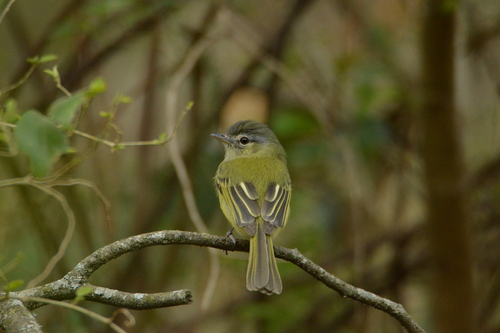
Yellow-olive Flatbill (Tolmomyias sulphurescens) Yellow-olive Flatbill
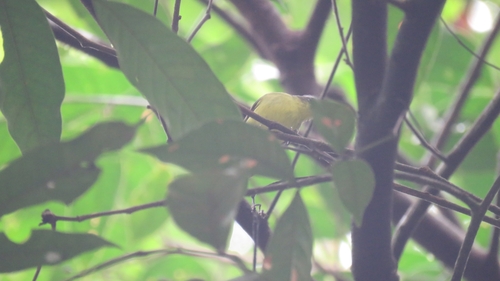
Yellow-bellied Tyrannulet (Ornithion semiflavum) Yellow-bellied Tyrannulet

Media

Loading…

In short

The Yellow-olive Flatbill and Yellow-bellied Tyrannulet can be distinguished primarily by their bill size and head markings. The Yellow-olive Flatbill has a notably broader bill and a light-gray crown without a dusky auricular mark, while the Yellow-bellied Tyrannulet typically has a smaller, more delicate bill and a more uniform head coloration.

Identification tips

  1. Look for the broad bill of the Yellow-olive Flatbill compared to the smaller bill of the Yellow-bellied Tyrannulet. 2. Check for the light-gray crown and lack of dusky auricular mark on the Yellow-olive Flatbill. 3. Observe the overall size and structure; the Yellow-olive Flatbill is larger and more robust. 4. Note the habitat; the Yellow-olive Flatbill prefers forest edges, while the Yellow-bellied Tyrannulet may be in more open areas.

Size

The Yellow-olive Flatbill is generally larger and more robust compared to the smaller, more delicate Yellow-bellied Tyrannulet.

Plumage

The Yellow-olive Flatbill has a light-gray crown and pale gray cheeks and throat, with a pale yellow belly. In contrast, the Yellow-bellied Tyrannulet often shows a more uniform ochraceous or yellowish tone across its underparts.

Behaviour

Both species forage for insects, but the Yellow-olive Flatbill is more deliberate in its movements, often seen slowly searching foliage before making a short sally. The Yellow-bellied Tyrannulet is more active and agile in its foraging behavior.

Habitat

The Yellow-olive Flatbill is associated with forest and forest edges, while the Yellow-bellied Tyrannulet can also be found in more open woodland areas.

Voice

The vocalizations of these species are not well-documented here, but they may differ. Observers should note any distinct calls or songs when identifying these birds.

Submit a better description

Use the same sections as the comparison. Your text is published immediately.

The Yellow-olive Flatbill and Yellow-bellied Tyrannulet can be distinguished primarily by their bill size and head markings. The Yellow-olive Flatbill has a notably broader bill and a light-gray crown without a dusky auricular mark, while the Yellow-bellied Tyrannulet typically has a smaller, more delicate bill and a more uniform head coloration.

  1. Look for the broad bill of the Yellow-olive Flatbill compared to the smaller bill of the Yellow-bellied Tyrannulet. 2. Check for the light-gray crown and lack of dusky auricular mark on the Yellow-olive Flatbill. 3. Observe the overall size and structure; the Yellow-olive Flatbill is larger and more robust. 4. Note the habitat; the Yellow-olive Flatbill prefers forest edges, while the Yellow-bellied Tyrannulet may be in more open areas.

The Yellow-olive Flatbill is generally larger and more robust compared to the smaller, more delicate Yellow-bellied Tyrannulet.

The Yellow-olive Flatbill has a light-gray crown and pale gray cheeks and throat, with a pale yellow belly. In contrast, the Yellow-bellied Tyrannulet often shows a more uniform ochraceous or yellowish tone across its underparts.

Both species forage for insects, but the Yellow-olive Flatbill is more deliberate in its movements, often seen slowly searching foliage before making a short sally. The Yellow-bellied Tyrannulet is more active and agile in its foraging behavior.

The Yellow-olive Flatbill is associated with forest and forest edges, while the Yellow-bellied Tyrannulet can also be found in more open woodland areas.

The vocalizations of these species are not well-documented here, but they may differ. Observers should note any distinct calls or songs when identifying these birds.

Discard your changes?

You have unsaved edits. If you leave now, those changes will be lost.

Yellow-olive Flatbill · Yellow-bellied Tyrannulet · My Tricky Birds