Birdr

Yellow-olive Flatbill vs Yellow-winged Flatbill

Tolmomyias sulphurescens versus Tolmomyias flavotectus

Play a quiz with Yellow-olive Flatbill and Yellow-winged Flatbill
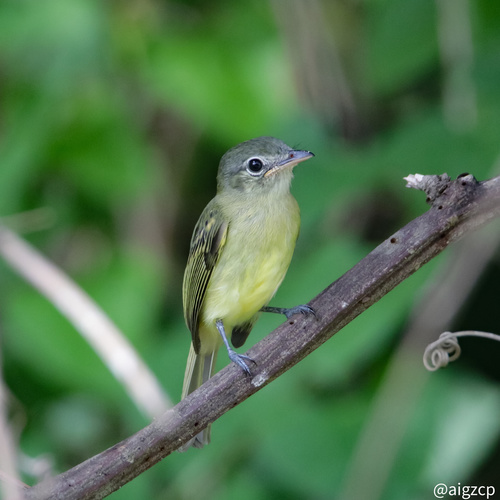
Yellow-olive Flatbill (Tolmomyias sulphurescens) Yellow-olive Flatbill
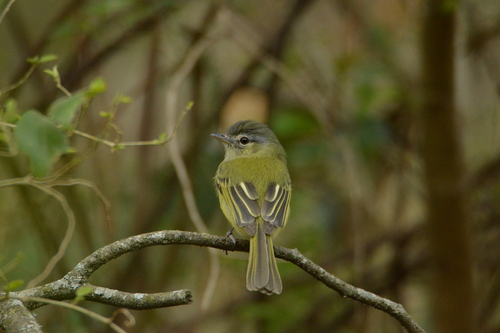
Yellow-winged Flatbill (Tolmomyias flavotectus) Yellow-winged Flatbill

Media

Loading…

In short

The Yellow-olive Flatbill and Yellow-winged Flatbill are both small flycatchers with subtle differences. The most reliable field mark is the eye color: Yellow-olive Flatbill has a whitish to pale yellow iris, while the Yellow-winged Flatbill is known for its orange eyes. Both species have similar habitats and behaviors, making visual identification crucial.

Identification tips

  1. Check eye color: Yellow-olive Flatbill has whitish to pale yellow eyes, while Yellow-winged Flatbill has orange eyes. 2. Look for yellow on wings: Yellow-winged Flatbill may have yellow on the wings, as suggested by its name. 3. Observe plumage: Note the light-gray crown and pale gray cheeks of the Yellow-olive Flatbill. 4. Consider habitat and behavior, but these are similar for both species.

Size

Both species are similar in size, typical of small flycatchers.

Plumage

Yellow-olive Flatbill has a light-gray crown and pale gray cheeks and throat, with a pale yellow belly. The Yellow-winged Flatbill is less documented in terms of plumage, but its name suggests yellow on the wings, which could be a distinguishing feature.

Behaviour

Both species forage by slowly searching foliage for insects and making short sallies or quick upward strikes. They often forage alone or in pairs and sometimes join mixed-species flocks.

Habitat

Both species are associated with forest and forest edge habitats. They are often found in similar environments, making habitat less useful for differentiation.

Voice

Vocalizations are not well-documented in the notes, but subspecies of Yellow-olive Flatbill may differ in voice. Specific vocal differences with Yellow-winged Flatbill are not detailed.

Submit a better description

Use the same sections as the comparison. Your text is published immediately.

The Yellow-olive Flatbill and Yellow-winged Flatbill are both small flycatchers with subtle differences. The most reliable field mark is the eye color: Yellow-olive Flatbill has a whitish to pale yellow iris, while the Yellow-winged Flatbill is known for its orange eyes. Both species have similar habitats and behaviors, making visual identification crucial.

  1. Check eye color: Yellow-olive Flatbill has whitish to pale yellow eyes, while Yellow-winged Flatbill has orange eyes. 2. Look for yellow on wings: Yellow-winged Flatbill may have yellow on the wings, as suggested by its name. 3. Observe plumage: Note the light-gray crown and pale gray cheeks of the Yellow-olive Flatbill. 4. Consider habitat and behavior, but these are similar for both species.

Both species are similar in size, typical of small flycatchers.

Yellow-olive Flatbill has a light-gray crown and pale gray cheeks and throat, with a pale yellow belly. The Yellow-winged Flatbill is less documented in terms of plumage, but its name suggests yellow on the wings, which could be a distinguishing feature.

Both species forage by slowly searching foliage for insects and making short sallies or quick upward strikes. They often forage alone or in pairs and sometimes join mixed-species flocks.

Both species are associated with forest and forest edge habitats. They are often found in similar environments, making habitat less useful for differentiation.

Vocalizations are not well-documented in the notes, but subspecies of Yellow-olive Flatbill may differ in voice. Specific vocal differences with Yellow-winged Flatbill are not detailed.

Discard your changes?

You have unsaved edits. If you leave now, those changes will be lost.

Yellow-olive Flatbill · Yellow-winged Flatbill · My Tricky Birds