Birdr

Yellow Rail vs Wilson's Snipe

Coturnicops noveboracensis versus Gallinago delicata

Play a quiz with Yellow Rail and Wilson's Snipe
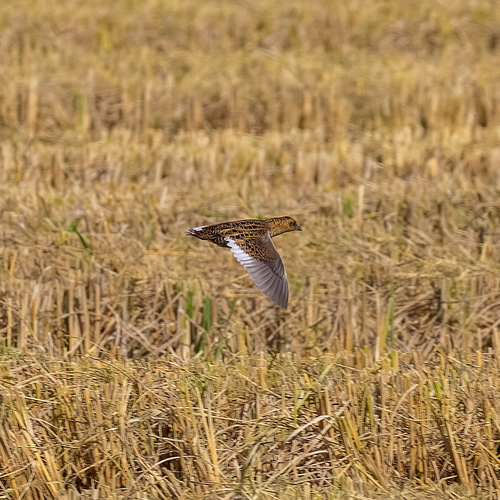
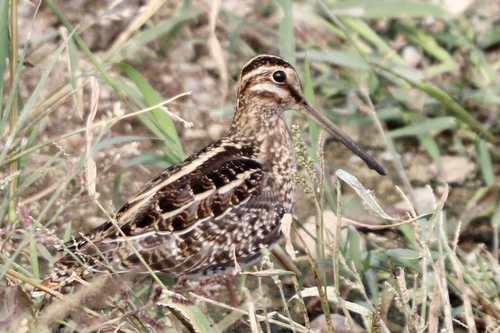
Yellow Rail (Coturnicops noveboracensis) Yellow Rail
Wilson's Snipe (Gallinago delicata) Wilson's Snipe

Media

Loading…

In short

The Yellow Rail and Wilson's Snipe are both secretive marsh birds, but they differ significantly in appearance and behavior. The Yellow Rail is a small, elusive bird that often remains hidden in dense vegetation, while Wilson's Snipe is larger, with a distinctive long bill and more visible in open wetland areas.

Identification tips

1. Bill Length: Wilson's Snipe has a long, straight bill, while Yellow Rail has a short bill. 2. Size and Shape: Yellow Rail is smaller and more compact. 3. Plumage Patterns: Look for the intricate striping on Wilson's Snipe versus the more uniform barring on Yellow Rail. 4. Behavior: Observe for the secretive, ground-hugging behavior of Yellow Rail versus the probing and flushing behavior of Wilson's Snipe. 5. Vocalizations: Listen for the Yellow Rail's clicking call at night and the Wilson's Snipe's winnowing display.

Size

The Yellow Rail is smaller and more compact, resembling a small quail, whereas Wilson's Snipe is larger and more elongated, with a long, straight bill.

Plumage

Yellow Rail has a buffy-yellow and brown barred plumage, aiding its camouflage in marsh grasses. Wilson's Snipe displays a more intricate pattern with bold stripes and spots, particularly on the back and head, and a striking white belly.

Behaviour

Yellow Rails are extremely secretive, often running or hiding rather than flying. Wilson's Snipes are more likely to be seen probing the mud with their long bills and may flush with a zigzag flight when disturbed.

Habitat

Yellow Rails prefer higher, drier margins of marshes and wet meadows, while Wilson's Snipes are found in a variety of wetland habitats, including marshes, bogs, and wet fields.

Voice

The Yellow Rail's call is a unique metallic 5-note 'click-click, click-click-click,' often heard at night. Wilson's Snipe has a distinctive winnowing sound produced by its tail feathers during display flights, along with a series of sharp 'scaipe' calls.

Submit a better description

Use the same sections as the comparison. Your text is published immediately.

The Yellow Rail and Wilson's Snipe are both secretive marsh birds, but they differ significantly in appearance and behavior. The Yellow Rail is a small, elusive bird that often remains hidden in dense vegetation, while Wilson's Snipe is larger, with a distinctive long bill and more visible in open wetland areas.

1. Bill Length: Wilson's Snipe has a long, straight bill, while Yellow Rail has a short bill. 2. Size and Shape: Yellow Rail is smaller and more compact. 3. Plumage Patterns: Look for the intricate striping on Wilson's Snipe versus the more uniform barring on Yellow Rail. 4. Behavior: Observe for the secretive, ground-hugging behavior of Yellow Rail versus the probing and flushing behavior of Wilson's Snipe. 5. Vocalizations: Listen for the Yellow Rail's clicking call at night and the Wilson's Snipe's winnowing display.

The Yellow Rail is smaller and more compact, resembling a small quail, whereas Wilson's Snipe is larger and more elongated, with a long, straight bill.

Yellow Rail has a buffy-yellow and brown barred plumage, aiding its camouflage in marsh grasses. Wilson's Snipe displays a more intricate pattern with bold stripes and spots, particularly on the back and head, and a striking white belly.

Yellow Rails are extremely secretive, often running or hiding rather than flying. Wilson's Snipes are more likely to be seen probing the mud with their long bills and may flush with a zigzag flight when disturbed.

Yellow Rails prefer higher, drier margins of marshes and wet meadows, while Wilson's Snipes are found in a variety of wetland habitats, including marshes, bogs, and wet fields.

The Yellow Rail's call is a unique metallic 5-note 'click-click, click-click-click,' often heard at night. Wilson's Snipe has a distinctive winnowing sound produced by its tail feathers during display flights, along with a series of sharp 'scaipe' calls.

Discard your changes?

You have unsaved edits. If you leave now, those changes will be lost.

Yellow Rail · Wilson's Snipe · My Tricky Birds