Birdr

Yellow-throated Sandgrouse vs Rufous-breasted Sparrowhawk

Pterocles gutturalis versus Accipiter rufiventris

Play a quiz with Yellow-throated Sandgrouse and Rufous-breasted Sparrowhawk
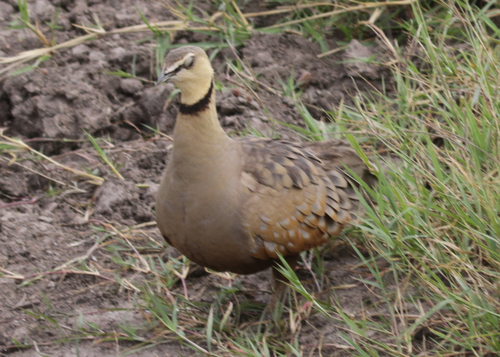
Yellow-throated Sandgrouse (Pterocles gutturalis) Yellow-throated Sandgrouse
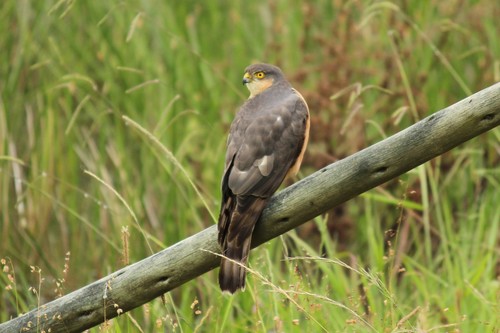
Rufous-breasted Sparrowhawk (Accipiter rufiventris) Rufous-breasted Sparrowhawk

Media

Loading…

In short

The Yellow-throated Sandgrouse and Rufous-breasted Sparrowhawk are unlikely to be confused due to their distinct differences in size, shape, and habitat. The sandgrouse is a ground-dwelling bird with a stout body and short legs, while the sparrowhawk is a sleek raptor with long wings and a hooked bill.

Identification tips

  1. Location and habitat: Check the environment; sandgrouse are in open areas, sparrowhawks in forests. 2. Body shape: Sandgrouse have a plump body and short legs; sparrowhawks are slender with long wings. 3. Plumage: Look for the yellow throat on the sandgrouse and the rufous breast on the sparrowhawk. 4. Behavior: Observe flocking behavior for sandgrouse and solitary, agile flight for sparrowhawks.

Size

The Yellow-throated Sandgrouse is generally larger and bulkier than the Rufous-breasted Sparrowhawk, which is more streamlined and agile.

Plumage

The Yellow-throated Sandgrouse has a distinctive yellow throat and mottled brown body, while the Rufous-breasted Sparrowhawk features a rufous breast and grey upperparts. These plumage differences are quite pronounced.

Behaviour

Sandgrouse are often seen in flocks on the ground, especially near water sources, whereas sparrowhawks are solitary hunters, often seen flying swiftly through wooded areas.

Habitat

Yellow-throated Sandgrouse prefer open, arid environments such as savannas and grasslands. In contrast, Rufous-breasted Sparrowhawks are typically found in forested or wooded areas.

Voice

Vocalizations are not a primary distinguishing feature between these species, as they inhabit different environments and have different calls.

Submit a better description

Use the same sections as the comparison. Your text is published immediately.

The Yellow-throated Sandgrouse and Rufous-breasted Sparrowhawk are unlikely to be confused due to their distinct differences in size, shape, and habitat. The sandgrouse is a ground-dwelling bird with a stout body and short legs, while the sparrowhawk is a sleek raptor with long wings and a hooked bill.

  1. Location and habitat: Check the environment; sandgrouse are in open areas, sparrowhawks in forests. 2. Body shape: Sandgrouse have a plump body and short legs; sparrowhawks are slender with long wings. 3. Plumage: Look for the yellow throat on the sandgrouse and the rufous breast on the sparrowhawk. 4. Behavior: Observe flocking behavior for sandgrouse and solitary, agile flight for sparrowhawks.

The Yellow-throated Sandgrouse is generally larger and bulkier than the Rufous-breasted Sparrowhawk, which is more streamlined and agile.

The Yellow-throated Sandgrouse has a distinctive yellow throat and mottled brown body, while the Rufous-breasted Sparrowhawk features a rufous breast and grey upperparts. These plumage differences are quite pronounced.

Sandgrouse are often seen in flocks on the ground, especially near water sources, whereas sparrowhawks are solitary hunters, often seen flying swiftly through wooded areas.

Yellow-throated Sandgrouse prefer open, arid environments such as savannas and grasslands. In contrast, Rufous-breasted Sparrowhawks are typically found in forested or wooded areas.

Vocalizations are not a primary distinguishing feature between these species, as they inhabit different environments and have different calls.

Discard your changes?

You have unsaved edits. If you leave now, those changes will be lost.

Yellow-throated Sandgrouse · Rufous-breasted Sparrowhawk · My Tricky Birds