
Birdr

Yellow-winged Flatbill vs Lesser Elaenia

Tolmomyias flavotectus versus Elaenia chiriquensis

Play a quiz with Yellow-winged Flatbill and Lesser Elaenia
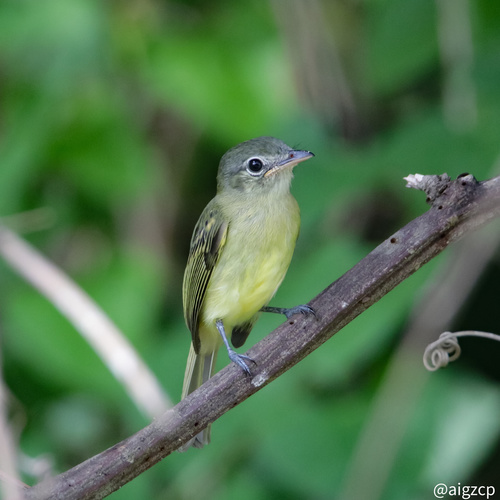
Yellow-winged Flatbill (Tolmomyias flavotectus) Yellow-winged Flatbill
Lesser Elaenia (Elaenia chiriquensis) Lesser Elaenia

Media

Loading…

In short

The Yellow-winged Flatbill and Lesser Elaenia are both small flycatchers, but they differ in bill shape and wing markings. The Yellow-winged Flatbill has a broader, flatter bill and distinctive yellow wing edges, while the Lesser Elaenia has a more typical flycatcher bill and lacks the yellow wing markings.

Identification tips

1. Bill Shape: Look for the broader, flatter bill of the Yellow-winged Flatbill. 2. Wing Markings: Check for yellow edges on the wings of the Yellow-winged Flatbill. 3. Habitat: Consider the habitat; Yellow-winged Flatbill prefers dense forests, while Lesser Elaenia is more versatile. 4. Vocalizations: Listen for differences in calls if known locally.

Size

Both species are small, but the Yellow-winged Flatbill tends to appear slightly more compact due to its broader bill.

Plumage

The Yellow-winged Flatbill is notable for its yellow-edged wings, which are absent in the Lesser Elaenia. The Lesser Elaenia typically has more muted, olive-toned plumage.

Behaviour

Both species exhibit typical flycatcher behavior, such as sallying for insects, but specific behavioral differences are not well-documented.

Habitat

The Yellow-winged Flatbill is often found in humid forest environments, while the Lesser Elaenia is more adaptable, inhabiting a variety of open and semi-open areas.

Voice

Vocalizations differ, with the Yellow-winged Flatbill having a more distinct call, but specific descriptions of their calls are not detailed here.

Submit a better description

Use the same sections as the comparison. Your text is published immediately.

The Yellow-winged Flatbill and Lesser Elaenia are both small flycatchers, but they differ in bill shape and wing markings. The Yellow-winged Flatbill has a broader, flatter bill and distinctive yellow wing edges, while the Lesser Elaenia has a more typical flycatcher bill and lacks the yellow wing markings.

1. Bill Shape: Look for the broader, flatter bill of the Yellow-winged Flatbill. 2. Wing Markings: Check for yellow edges on the wings of the Yellow-winged Flatbill. 3. Habitat: Consider the habitat; Yellow-winged Flatbill prefers dense forests, while Lesser Elaenia is more versatile. 4. Vocalizations: Listen for differences in calls if known locally.

Both species are small, but the Yellow-winged Flatbill tends to appear slightly more compact due to its broader bill.

The Yellow-winged Flatbill is notable for its yellow-edged wings, which are absent in the Lesser Elaenia. The Lesser Elaenia typically has more muted, olive-toned plumage.

Both species exhibit typical flycatcher behavior, such as sallying for insects, but specific behavioral differences are not well-documented.

The Yellow-winged Flatbill is often found in humid forest environments, while the Lesser Elaenia is more adaptable, inhabiting a variety of open and semi-open areas.

Vocalizations differ, with the Yellow-winged Flatbill having a more distinct call, but specific descriptions of their calls are not detailed here.

Discard your changes?

You have unsaved edits. If you leave now, those changes will be lost.

Yellow-winged Flatbill · Lesser Elaenia · My Tricky Birds