
Zone-tailed Hawk vs Ferruginous Hawk
Buteo albonotatus versus Buteo regalis
Play a quiz with Zone-tailed Hawk and Ferruginous Hawk
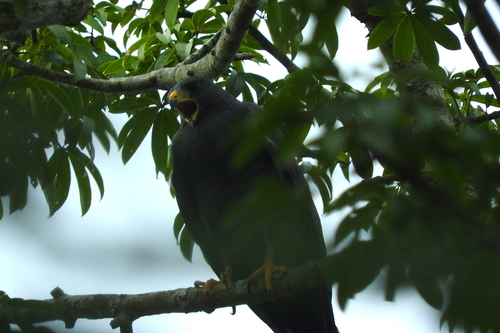 Zone-tailed Hawk
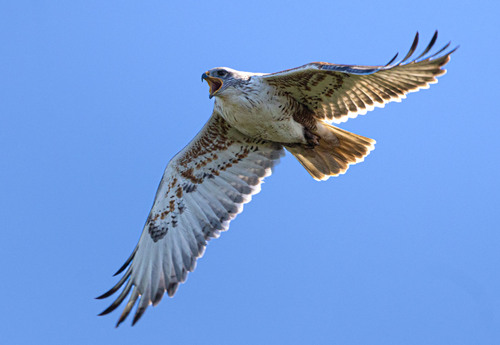 Ferruginous Hawk
In short
The most reliable way to separate Zone-tailed Hawk from Ferruginous Hawk is by overall plumage tone and wing pattern in flight: Zone-tailed is nearly black with pale barred flight feathers and a boldly banded tail, while Ferruginous is pale below with rufous and white upperparts, and shows distinctive pale 'windows' in the wings and a rufous rump. Immature Zone-taileds have small white breast spots and more finely banded tails, but still appear dark overall; Ferruginous Hawks, regardless of age, show a white underbody and prominent rufous or rusty tones above. Structurally, Ferruginous is much bulkier and longer-winged, with feathered legs down to the toes, while Zone-tailed is more slender and vulture-like in flight. Both species can soar with a dihedral, but their coloration and shape are very different when seen well.
Identification tips
- Overall color in flight: Zone-tailed Hawk is nearly black with pale barred primaries and a boldly banded tail; Ferruginous Hawk is white below with rufous and white above, and never looks all-dark.
- Tail pattern: Zone-tailed shows 3–4 pale bands across the tail (the second from the tip is broadest), visible from below and above; Ferruginous has a pale tail with a rufous wash and lacks strong banding.
- Upperwing in flight: Ferruginous Hawk shows two pale 'windows' on the outer upperwing and a rufous rump—unique among Buteos. Zone-tailed lacks these pale panels and is uniformly dark above except for barred primaries.
- Underwing pattern: Ferruginous has whitish underwings with rufous patagial marks and dark 'comma' marks at the wrist; Zone-tailed's underwings are dark with pale barring on the flight feathers, lacking any rufous or white base.
- Leg feathering: Ferruginous Hawk has feathered legs down to the toes (like a golden eagle); Zone-tailed has bare yellow legs.
- Head and facial markings: Ferruginous has a white head with a dark eye streak; Zone-tailed is dark-headed with a possible faint white mark on the face and light gray lores.
- Breast and belly: Ferruginous is white-bellied, even in immatures; Zone-tailed is dark-bellied, with immatures only showing small white spots.
- Flight shape: Ferruginous is massive, long-winged, and broad-chested; Zone-tailed is slender, with long tail and wings, and a vulture-like silhouette.
- Flight style: Both can soar with wings in a dihedral, but Zone-tailed rocks side-to-side and often joins vulture flocks, while Ferruginous is steadier and more powerful.
- Perched posture: Ferruginous appears upright, large, and heavy; Zone-tailed is slimmer and less bulky.
- Bill and feet: Ferruginous has a larger bill and the most robust feet among Buteos; Zone-tailed has a smaller bill and less massive feet.
- Habitat context: Ferruginous is found in open plains and prairies; Zone-tailed prefers canyons, arid foothills, and open woodlands.
- Immature confusion: Immature Zone-taileds are still dark overall, with only small white breast spots and a finely banded tail; immature Ferruginous are always pale below and rufous above.
- Tail length: Zone-tailed has a proportionally longer tail, enhancing its vulture-like look; Ferruginous's tail is broad and not as long relative to body.
- Seasonal/sex differences: Both sexes are similar in plumage; Ferruginous females are larger, but this is not a reliable field mark. No strong seasonal variation in either species.
Size
Ferruginous Hawk is significantly larger and bulkier than Zone-tailed Hawk. While Zone-tailed averages 762.5 g in body mass [wikidata], Ferruginous is the largest Buteo in North America, with a much more robust build, longer wings, and a larger bill and feet. The Ferruginous Hawk's tarsus and tail are both longer, and its wingspan is greater. Zone-tailed is a medium-sized, slender Buteo, comparable in length to Red-tailed Hawk but lighter and less bulky. In the field, Ferruginous will appear massive, with a broad chest and large head, while Zone-tailed is slim and almost vulture-like.
Plumage
- Immatures/Juveniles:
- Zone-tailed Hawk: Immatures are dark overall, like adults, but show small white spots on the breast and a tail with narrow gray and black bands and a broad dark tip. The wings remain mostly blackish with barred flight feathers, giving a silvery look from a distance. No pale underparts or rufous tones.
- Ferruginous Hawk: Both adults and immatures are pale below, with a white breast and belly, and a white head with a dark eye streak. The upperparts are rufous, especially on the back and inner wing-coverts, and the underwings are whitish with rufous patagial markings and dark 'comma' marks at the wrist. In flight, the upperwing shows two pale 'windows' and a rufous rump, which are unique among Buteos.
- Adults:
- Zone-tailed Hawk: Uniformly blackish with barred gray flight feathers and a tail with 3–4 pale bands (the second from the tip is broadest and most conspicuous). Cere and legs are yellow, lores are light gray, and a faint white mark may be seen on the face. No rufous or white body plumage.
- Ferruginous Hawk: White underparts, rufous upperparts, and a white head with a dark streak. The legs are feathered to the toes. The underwing is whitish with rufous at the base and dark commas at the wrist. The tail is pale with a rufous wash and lacks strong banding.
Behaviour
Both species soar with wings in a slight dihedral, but their flight styles differ subtly. Zone-tailed Hawk often rocks side-to-side and mimics the flight of Turkey Vultures, sometimes joining vulture kettles to approach prey. Ferruginous Hawk also soars in a dihedral but appears more powerful and steady, with slower, deeper wingbeats. Perched, Ferruginous is upright and massive, while Zone-tailed appears slimmer and more agile. Zone-tailed is an active predator, while Ferruginous often hunts from perches or low flight over open country.
Habitat
Zone-tailed Hawk favors warm, dry regions, often near canyons, arid foothills, and open woodlands, and is most often seen in the southwestern US and Central/South America. Ferruginous Hawk prefers open grasslands, prairies, and arid plains, especially in western North America. While both can occur in open country, Ferruginous avoids wooded canyons and is rarely seen in the same habitats as Zone-tailed. Context can help: Zone-tailed is more likely in rocky, brushy terrain; Ferruginous in wide-open, treeless expanses.