
Suirirí Piquirrojo vs Avutarda de Namibia
Dendrocygna autumnalis frente a Neotis ludwigii
Juega un quiz con Suirirí Piquirrojo y Avutarda de Namibia
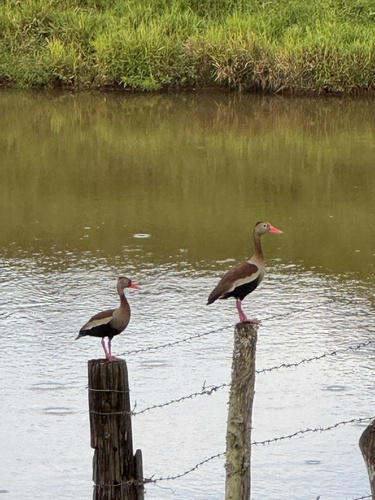 Suirirí Piquirrojo
 Avutarda de Namibia
En breve
El Suirirí Piquirrojo y la Avutarda de Namibia se distinguen fácilmente por su estructura y preferencias de hábitat. El suirirí es un ave acuática con un cuello y patas largos distintivos, mientras que la avutarda es un gran ave terrestre con un cuerpo robusto y un cuello más corto. Observar sus entornos preferidos también ayudará en la identificación.
Consejos de identificación
1. Estructura: Busca el cuello y las patas largas del Suirirí Piquirrojo, en comparación con el cuerpo robusto y el cuello más corto de la Avutarda de Namibia. 2. Hábitat: Verifica el entorno circundante; la presencia de agua sugiere el suirirí, mientras que las áreas secas y abiertas sugieren la avutarda. 3. Plumaje: Nota el vientre negro contrastante del suirirí contra el plumaje más uniforme y en tonos tierra de la avutarda.
Tamaño
La Avutarda de Namibia es significativamente más grande y robusta que el Suirirí Piquirrojo.
Plumaje
El Suirirí Piquirrojo tiene un striking vientre negro y un cuerpo castaño, mientras que la Avutarda de Namibia presenta un plumaje más críptico y en tonos tierra adecuado para el camuflaje en entornos secos.
Hábitat
Los Suirirí Piquirrojo se encuentran típicamente cerca de cuerpos de agua como estanques y pantanos, mientras que la Avutarda de Namibia habita paisajes abiertos áridos y semiáridos.
Suirirí Piquirrojo · Avutarda de Namibia · Mis aves difíciles