
Black-bellied Whistling-Duck vs Ludwig's Bustard
Dendrocygna autumnalis versus Neotis ludwigii
Play a quiz with Black-bellied Whistling-Duck and Ludwig's Bustard
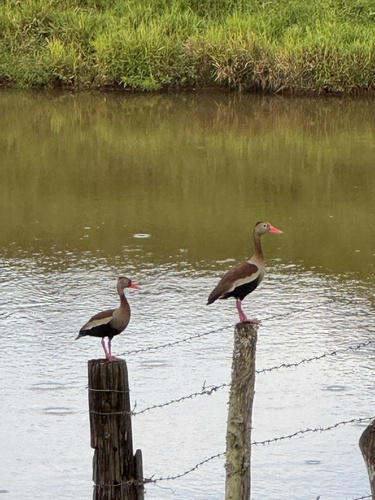 Black-bellied Whistling-Duck
 Ludwig's Bustard
In short
The Black-bellied Whistling-Duck and Ludwig's Bustard are easily distinguished by their structure and habitat preferences. The whistling-duck is a waterfowl with a distinctive long neck and legs, while the bustard is a large terrestrial bird with a robust body and shorter neck. Observing their preferred environments will also aid in identification.
Identification tips
1. Structure: Look for the long neck and legs of the Black-bellied Whistling-Duck, compared to the robust body and shorter neck of Ludwig's Bustard. 2. Habitat: Check the surrounding environment; water presence suggests the whistling-duck, while dry open areas suggest the bustard. 3. Plumage: Note the contrasting black belly of the whistling-duck against the more uniform, earth-toned plumage of the bustard.
Size
Ludwig's Bustard is significantly larger and more robust than the Black-bellied Whistling-Duck.
Plumage
The Black-bellied Whistling-Duck has a striking black belly and chestnut body, while Ludwig's Bustard features more cryptic, earth-toned plumage suited for camouflage in dry environments.
Habitat
Black-bellied Whistling-Ducks are typically found near water bodies such as ponds and marshes, whereas Ludwig's Bustard inhabits arid and semi-arid open landscapes.
Black-bellied Whistling-Duck · Ludwig's Bustard · My Tricky Birds