
Cormorán Carinegro vs Mielero Carinegro
Phalacrocorax fuscescens frente a Melithreptus affinis
Juega un quiz con Cormorán Carinegro y Mielero Carinegro
 Cormorán Carinegro
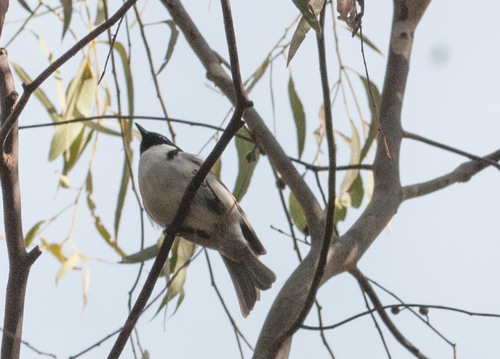 Mielero Carinegro
En breve
El Cormorán Carinegro y el Mielero Carinegro se distinguen fácilmente por su hábitat y estructura. El cormorán es un ave acuática con un cuello y cuerpo largos, mientras que el mielero es un pequeño pájaro cantor arbóreo. Observar su entorno y forma corporal los diferenciará rápidamente.
Consejos de identificación
- Verifica el hábitat: aguas costeras para cormoranes, bosques para mieleros. 2. Observa la forma del cuerpo: cuello largo para cormoranes, pequeño y compacto para mieleros. 3. Nota el comportamiento: nadando/buceando para cormoranes, revoloteando entre árboles para mieleros.
Tamaño
El Cormorán Carinegro es significativamente más grande con un cuello y cuerpo largos, mientras que el Mielero Carinegro es pequeño y compacto.
Plumaje
El Cormorán Carinegro tiene un plumaje predominantemente negro y blanco con una distintiva cara negra, mientras que el Mielero Carinegro presenta una cabeza negra con partes inferiores blancas en contraste.
Comportamiento
El Cormorán Carinegro se ve a menudo nadando o buceando en el agua, mientras que el Mielero Carinegro se observa típicamente revoloteando entre árboles y arbustos.
Hábitat
Los Cormoranes Carinegros se encuentran en ambientes costeros y marinos, mientras que los Mieleros Carinegros habitan en bosques y tierras boscosas.