
Black-faced Cormorant vs Black-headed Honeyeater
Phalacrocorax fuscescens versus Melithreptus affinis
Play a quiz with Black-faced Cormorant and Black-headed Honeyeater
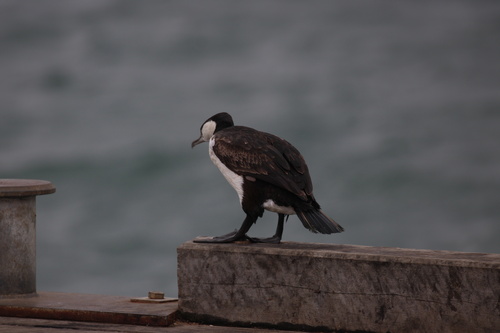 Black-faced Cormorant
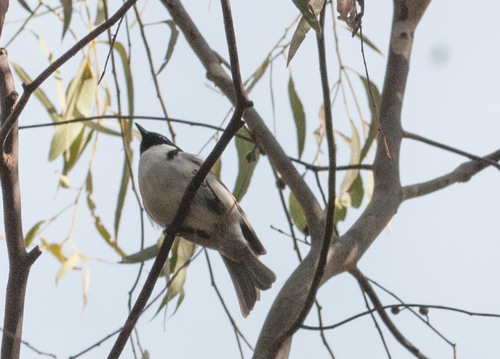 Black-headed Honeyeater
In short
The Black-faced Cormorant and the Black-headed Honeyeater are easily distinguished by their habitat and structure. The cormorant is a waterbird with a long neck and body, while the honeyeater is a small, arboreal songbird. Observing their environment and body shape will quickly differentiate them.
Identification tips
- Check the habitat: coastal waters for cormorants, forests for honeyeaters. 2. Observe body shape: long-necked for cormorants, small and compact for honeyeaters. 3. Note behavior: swimming/diving for cormorants, tree-flitting for honeyeaters.
Size
The Black-faced Cormorant is significantly larger with a long neck and body, whereas the Black-headed Honeyeater is small and compact.
Plumage
The Black-faced Cormorant has a predominantly black and white plumage with a distinctive black face, while the Black-headed Honeyeater features a black head with contrasting white underparts.
Behaviour
The Black-faced Cormorant is often seen swimming or diving in water, while the Black-headed Honeyeater is typically observed flitting through trees and shrubs.
Habitat
Black-faced Cormorants are found in coastal and marine environments, whereas Black-headed Honeyeaters inhabit forests and woodlands.
Black-faced Cormorant · Black-headed Honeyeater · My Tricky Birds