
Trogón Dorsiverde vs Cacique Lomiamarillo
Trogon viridis frente a Cacicus cela
Juega un quiz con Trogón Dorsiverde y Cacique Lomiamarillo
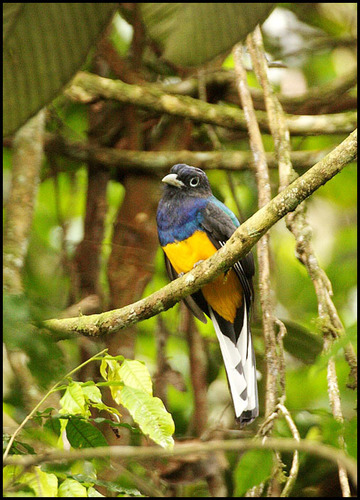 Trogón Dorsiverde
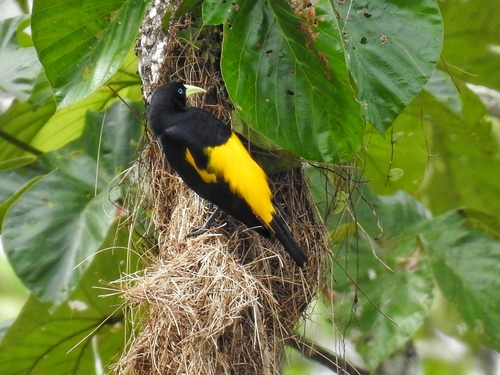 Cacique Lomiamarillo
En breve
El Trogón Dorsiverde y el Cacique Lomiamarillo se pueden distinguir principalmente por su plumaje y comportamiento. El trogón presenta tonos iridiscentes de verde y azul purpúreo con una cola distintiva con bordes blancos, mientras que el cacique es mayormente negro con parches amarillos prominentes en las alas, el dorso y el ventrículo. Comportamentalmente, el cacique es altamente social y a menudo se encuentra en colonias, a diferencia del trogón más solitario.
Consejos de identificación
Busque el plumaje iridisente de verde y azul purpúreo del Trogón Dorsiverde con una cola con bordes blancos. El cuerpo negro del Cacique Lomiamarillo con parches amarillos es distintivo. Observe el comportamiento: los caciques a menudo se ven en grandes colonias, a diferencia del trogón más solitario.
Tamaño
El Cacique Lomiamarillo es sexualmente dimórfico en tamaño, siendo los machos más grandes que las hembras, mientras que el Trogón Dorsiverde no presenta tales diferencias de tamaño entre sexos.
Plumaje
El Trogón Dorsiverde tiene un dorso iridisente verde, un dorso purpúreo y una cola con bordes blancos, con machos que muestran mejillas y garganta negras. En contraste, el Cacique Lomiamarillo es principalmente negro con llamativos parches amarillos en las alas, el dorso y el ventrículo.
Comportamiento
El Cacique Lomiamarillo es altamente social, criando en grandes colonias, mientras que el Trogón Dorsiverde es más solitario.
Voz
El Cacique Lomiamarillo es conocido por sus variadas vocalizaciones, incluyendo silbidos y llamados burbujeantes, y puede imitar a otras aves. No hay información específica sobre vocalización para el Trogón Dorsiverde en las notas proporcionadas.
Trogón Dorsiverde · Cacique Lomiamarillo · Mis aves difíciles