
surucuá-de-barriga-amarela vs xexéu
Trogon viridis versus Cacicus cela
Jogue um quiz com surucuá-de-barriga-amarela e xexéu
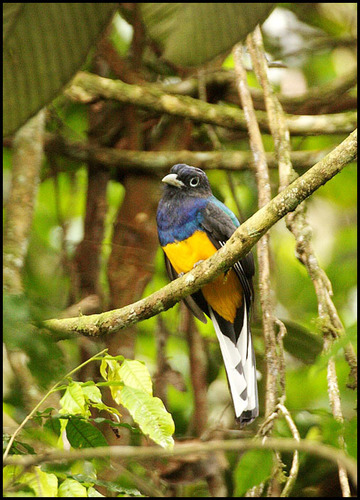 surucuá-de-barriga-amarela
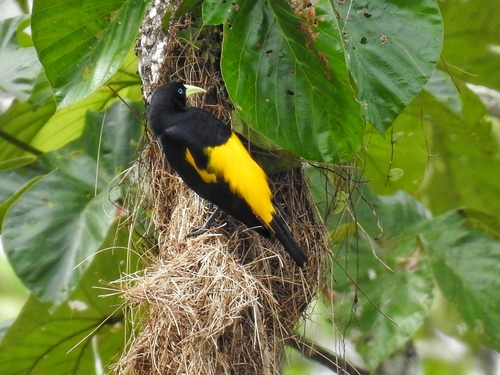 xexéu
xexéu
Em resumo
A surucuá-de-barriga-amarela e o xexéu podem ser distinguidos principalmente por sua plumagem e comportamento. A surucuá apresenta tons iridescentes de verde e azul-púrpura com uma cauda distinta com bordas brancas, enquanto o xexéu é principalmente preto com manchas amarelas proeminentes nas asas, na região do rabo e no ventrículo. Comportamentalmente, o xexéu é altamente social e frequentemente encontrado em colônias, ao contrário da surucuá, que é mais solitária.
Dicas de identificação
Procure pela plumagem iridescente de verde e azul-púrpura da surucuá-de-barriga-amarela com uma cauda de bordas brancas. O corpo preto do xexéu com manchas amarelas é distintivo. Observe o comportamento: os xexéus são frequentemente vistos em grandes colônias, ao contrário da surucuá, que é mais solitária.
Tamanho
O xexéu é sexualmente dimórfico em tamanho, com machos sendo maiores que fêmeas, enquanto a surucuá-de-barriga-amarela não apresenta tais diferenças de tamanho entre os sexos.
Plumagem
A surucuá-de-barriga-amarela tem um dorso iridescente verde, uma região do rabo azul-púrpura e uma cauda com bordas brancas, com machos apresentando bochechas e garganta pretas. Em contraste, o xexéu é principalmente preto com impressionantes manchas amarelas nas asas, na região do rabo e no ventrículo.
Comportamento
O xexéu é altamente social, reproduzindo-se em grandes colônias, enquanto a surucuá-de-barriga-amarela é mais solitária.
Voz
O xexéu é conhecido por suas vocalizações variadas, incluindo assobios e chamados borbulhantes, e pode imitar outros pássaros. Não há informações específicas sobre vocalização da surucuá-de-barriga-amarela nas notas fornecidas.