
Faisán Verde vs Abejaruco Persa
Phasianus versicolor frente a Merops persicus
Juega un quiz con Faisán Verde y Abejaruco Persa
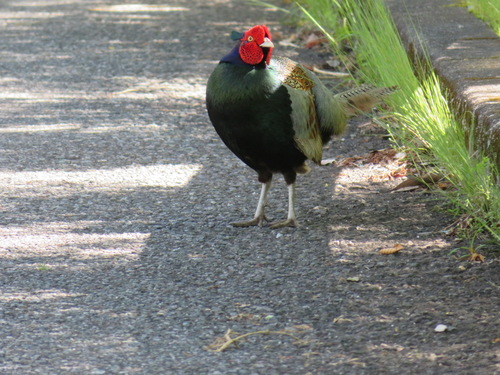 Faisán Verde
 Abejaruco Persa
En breve
El Faisán Verde y el Abejaruco Persa se distinguen fácilmente por su estructura y preferencias de hábitat. El Faisán Verde es un ave terrestre con un cuerpo robusto y una cola larga, mientras que el Abejaruco Persa es un insectívoro aéreo con un cuerpo esbelto y alas largas y puntiagudas. Estas especies ocupan diferentes nichos ecológicos, con el faisán encontrado en hábitats boscosos y de campo abierto y el abejaruco en áreas abiertas con vegetación escasa.
Consejos de identificación
Busque el cuerpo robusto y la cola larga del Faisán Verde cuando esté en el suelo, en comparación con el cuerpo esbelto y las alas largas y puntiagudas del Abejaruco Persa en vuelo. Tenga en cuenta el hábitat: los faisanes se encuentran en áreas boscosas y de campo abierto, mientras que los abejarucos están en áreas abiertas con vegetación escasa.
Tamaño
El Faisán Verde es significativamente más grande y robusto en comparación con el esbelto y más pequeño Abejaruco Persa.
Plumaje
Las hembras y los juveniles del Faisán Verde tienen plumaje moteado de color marrón arena, mientras que el Abejaruco Persa tiene plumaje verde vibrante con mejillas azules y una distintiva franja negra alrededor del ojo.
Comportamiento
Los Faisanes Verdes son aves que habitan en el suelo y a menudo se les ve buscando alimento en el suelo, mientras que los Abejarucos Persas son aéreos y frecuentemente se les ve atrapando insectos en vuelo.
Hábitat
Los Faisanes Verdes habitan en áreas ligeramente boscosas y hábitats de campo abierto, incluyendo parques y tierras agrícolas. Los Abejarucos Persas prefieren áreas abiertas con vegetación escasa, a menudo cerca del agua.