
Green Pheasant vs Blue-cheeked Bee-eater
Phasianus versicolor versus Merops persicus
Play a quiz with Green Pheasant and Blue-cheeked Bee-eater
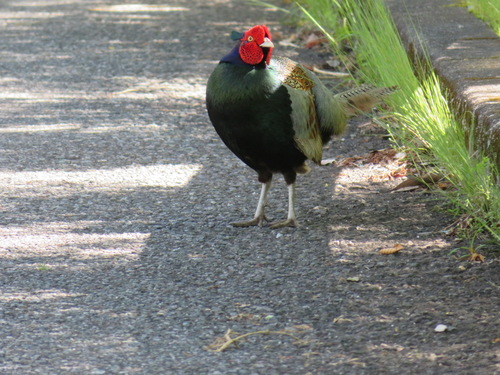
Green Pheasant
Blue-cheeked Bee-eater
In short
The Green Pheasant and Blue-cheeked Bee-eater are easily distinguished by their size and habitat preferences. The Green Pheasant is a large, ground-dwelling bird endemic to Japan, while the Blue-cheeked Bee-eater is a smaller, aerial insectivore found in open habitats across parts of Africa and Asia.
Identification tips
1. Size and Shape: Green Pheasants are much larger and bulkier than Blue-cheeked Bee-eaters. 2. Habitat: Look for Green Pheasants on the ground in Japan, while Blue-cheeked Bee-eaters are seen flying in open areas. 3. Plumage: Note the iridescent green of the pheasant versus the blue cheeks and green body of the bee-eater. 4. Behavior: Pheasants are ground foragers; bee-eaters are aerial hunters. 5. Calls: Listen for the harsh calls of the pheasant compared to the trilling of the bee-eater.
Size
The Green Pheasant is significantly larger than the Blue-cheeked Bee-eater, with a robust body typical of pheasants compared to the slender, elongated form of bee-eaters.
Plumage
Green Pheasants have a predominantly green plumage with iridescent qualities, especially in males, while Blue-cheeked Bee-eaters are characterized by their vibrant green bodies, blue cheeks, and a distinctive black eye stripe.
Behaviour
Green Pheasants are terrestrial and often found foraging on the ground, whereas Blue-cheeked Bee-eaters are highly aerial, catching insects in flight.
Habitat
Green Pheasants inhabit lightly wooded areas and open-country habitats in Japan, whereas Blue-cheeked Bee-eaters prefer open habitats like savannas, grasslands, and wetlands across their range.
Voice
Green Pheasants are known for their loud, harsh calls, whereas Blue-cheeked Bee-eaters have a more melodious, trilling call.