
Avutarda Kori vs Estrilda Común
Ardeotis kori frente a Estrilda astrild
Juega un quiz con Avutarda Kori y Estrilda Común
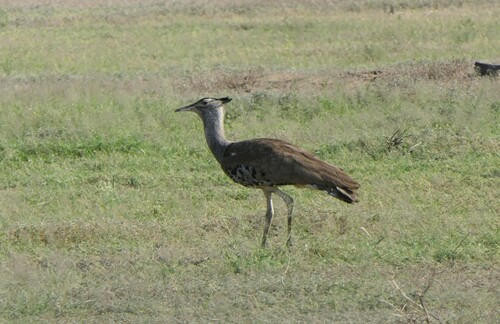 Avutarda Kori
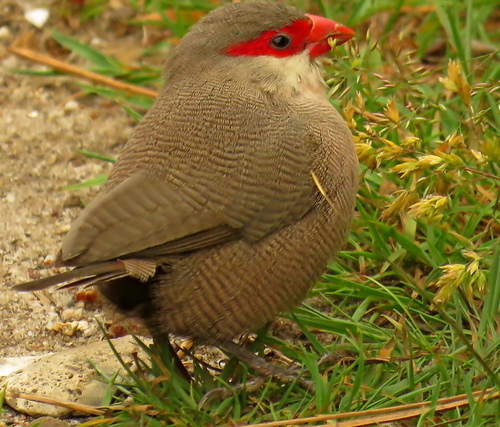 Estrilda Común
En breve
La Avutarda Kori y la Estrilda Común son muy diferentes en apariencia y hábitat, lo que las hace fáciles de distinguir. La Avutarda Kori es un ave grande que vive en el suelo, mientras que la Estrilda Común es un ave pequeña, parecida a un pinzón, que a menudo se encuentra en bandadas.
Consejos de identificación
Tamaño y forma: Busca el tamaño masivo y la construcción pesada de la Avutarda Kori en comparación con la pequeña y delicada Estrilda Común. Plumaje: Nota el plumaje moteado de marrón y gris de la Avutarda Kori frente al pico rojo y la máscara facial de la Estrilda Común. Comportamiento: Observa el comportamiento solitario o en pequeños grupos de la Avutarda Kori frente a la naturaleza gregaria de la Estrilda Común.
Tamaño
La Avutarda Kori es significativamente más grande, una de las aves voladoras más pesadas, mientras que la Estrilda Común es pequeña y ligera.
Plumaje
Las Avutardas Kori tienen un plumaje críptico, moteado de marrón y gris, adecuado para mezclarse en paisajes de sabana. Las Estrildas Comunes tienen un pico y una máscara facial rojos distintivos, con un cuerpo grisáceo y un toque de rojo en los flancos.
Comportamiento
Las Avutardas Kori a menudo se ven caminando lentamente por el suelo, solas o en pequeños grupos. Las Estrildas Comunes son más activas, a menudo se ven en bandadas y se observan frecuentemente alimentándose de semillas de hierba.
Hábitat
Las Avutardas Kori habitan en sabanas abiertas y regiones semiáridas. Las Estrildas Comunes prefieren praderas y áreas con vegetación densa, a menudo cerca del agua.