
Kori Bustard vs Common Waxbill
Ardeotis kori contro Estrilda astrild
Fai un quiz con Kori Bustard e Common Waxbill
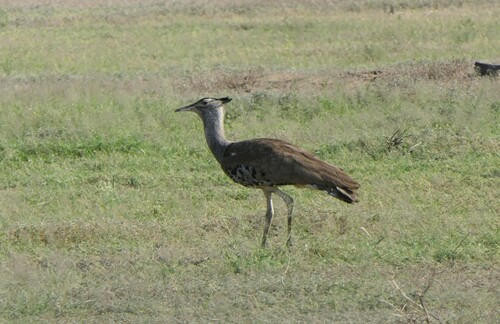 Kori Bustard
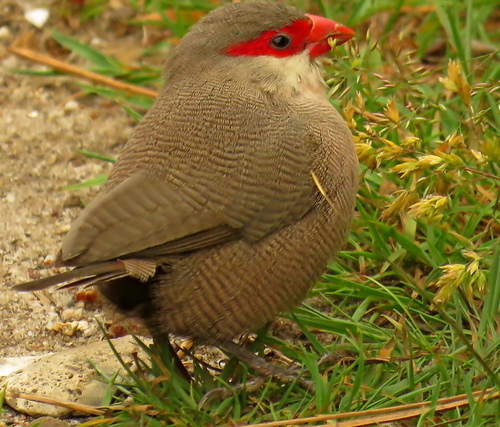 Common Waxbill
In breve
Il Kori Bustard e il Common Waxbill sono molto diversi nell'aspetto e nell'habitat, rendendoli facili da distinguere. Il Kori Bustard è un grande uccello terrestre, mentre il Common Waxbill è un piccolo uccello simile a un fringuello spesso trovato in gruppi.
Consigli di identificazione
Dimensione e forma: Cerca le dimensioni massicce e la corporatura pesante del Kori Bustard rispetto al piccolo e delicato Common Waxbill. Piumaggio: Nota il piumaggio maculato marrone e grigio del Kori Bustard rispetto al becco rosso e alla maschera facciale del Common Waxbill. Comportamento: Osserva il comportamento solitario o in piccoli gruppi del Kori Bustard rispetto alla natura gregaria del Common Waxbill.
Taglia
Il Kori Bustard è significativamente più grande, uno degli uccelli in volo più pesanti, mentre il Common Waxbill è piccolo e leggero.
Piumaggio
I Kori Bustard hanno un piumaggio criptico, maculato marrone e grigio adatto a mimetizzarsi nei paesaggi di savana. I Common Waxbill hanno un becco e una maschera facciale rossi distintivi, con un corpo grigiastro e un accenno di rosso sui fianchi.
Comportamento
I Kori Bustard vengono spesso visti camminare lentamente a terra, da soli o in piccoli gruppi. I Common Waxbill sono più attivi, spesso visti in gruppi, e vengono frequentemente osservati mentre si nutrono di semi d'erba.
Habitat
I Kori Bustard abitano savane aperte e regioni semi-aride. I Common Waxbill preferiscono praterie e aree con vegetazione densa, spesso vicino all'acqua.