
kori bustard vs bico-de-lacre
Ardeotis kori versus Estrilda astrild
Jogue um quiz com kori bustard e bico-de-lacre
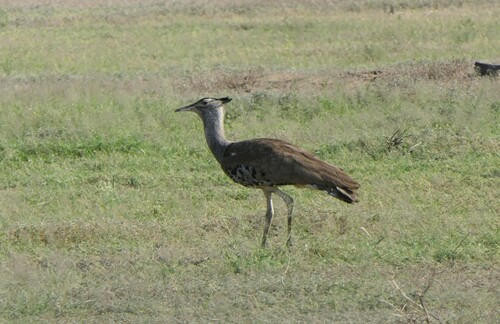 kori bustard
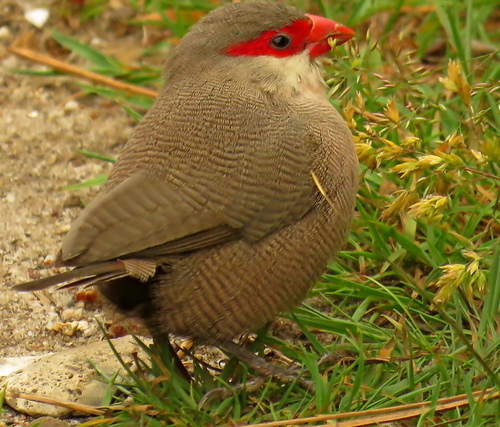 bico-de-lacre
Em resumo
O kori bustard e o bico-de-lacre são vastamente diferentes em aparência e habitat, tornando-os fáceis de distinguir. O kori bustard é uma grande ave terrestre, enquanto o bico-de-lacre é uma pequena ave semelhante a um tentilhão, frequentemente encontrada em bandos.
Dicas de identificação
Tamanho e forma: Procure pelo tamanho maciço e a construção pesada do kori bustard em comparação com o pequeno e delicado bico-de-lacre. Plumagem: Note o padrão marrom e cinza do kori bustard em contraste com o bico e a máscara facial vermelhos do bico-de-lacre. Comportamento: Observe o comportamento solitário ou em pequenos grupos do kori bustard em comparação com a natureza de bando do bico-de-lacre.
Tamanho
O kori bustard é significativamente maior, um dos pássaros voadores mais pesados, enquanto o bico-de-lacre é pequeno e leve.
Plumagem
Os kori bustards têm uma plumagem críptica, manchada de marrom e cinza, adequada para se misturar em paisagens de savana. Os bicos-de-lacre têm um bico e uma máscara facial vermelhos distintos, com um corpo acinzentado e um toque de vermelho nas flancos.
Comportamento
Os kori bustards são frequentemente vistos caminhando lentamente no chão, sozinhos ou em pequenos grupos. Os bicos-de-lacre são mais ativos, frequentemente vistos em bandos, e são frequentemente observados se alimentando de sementes de grama.
Habitat
Os kori bustards habitam savanas abertas e regiões semiáridas. Os bicos-de-lacre preferem campos e áreas com vegetação densa, frequentemente perto da água.