
Mosquerito Piquicurvo Norteño vs Titirijí Gris
Oncostoma cinereigulare frente a Poecilotriccus sylvia
Juega un quiz con Mosquerito Piquicurvo Norteño y Titirijí Gris
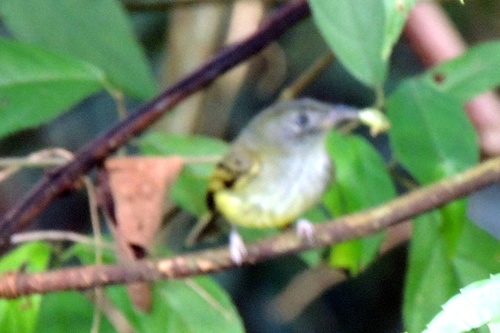 Mosquerito Piquicurvo Norteño
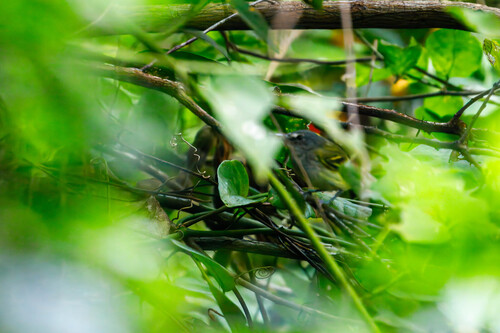 Titirijí Gris
En breve
El Mosquerito Piquicurvo Norteño se distingue por su pico corto, ancho y claramente curvado hacia abajo, mientras que el Titirijí Gris tiene una cabeza gris oscura con una marca loreal pálida y dos barras alares amarillas audaces. Ambas especies tienen llamados similares a los de ranas, pero sus hábitats y estructuras de nidificación difieren.
Consejos de identificación
Busque el pico claramente curvado hacia abajo del Mosquerito Piquicurvo Norteño como la característica distintiva principal. Para el Titirijí Gris, note la cabeza gris oscura y las barras alares amarillas. Considere el hábitat: Mosquerito Piquicurvo Norteño en bordes de bosque frente a Titirijí Gris en matorrales densos.
Plumaje
El Mosquerito Piquicurvo Norteño tiene un iris pálido y carece de las audaces barras alares amarillas que se ven en el Titirijí Gris, que también presenta partes superiores de color verde oliva y una cabeza gris oscura.
Hábitat
El Mosquerito Piquicurvo Norteño forrajea en el sotobosque y el medio del dosel de matorrales y bordes de bosque, mientras que el Titirijí Gris prefiere matorrales densos y enredaderas.
Voz
Ambas especies producen llamados que suenan similares a insectos o ranas.
Mosquerito Piquicurvo Norteño · Titirijí Gris · Mis aves difíciles