Northern Bentbill vs Slate-headed Tody-Flycatcher
Oncostoma cinereigulare versus Poecilotriccus sylvia
Play a quiz with Northern Bentbill and Slate-headed Tody-Flycatcher
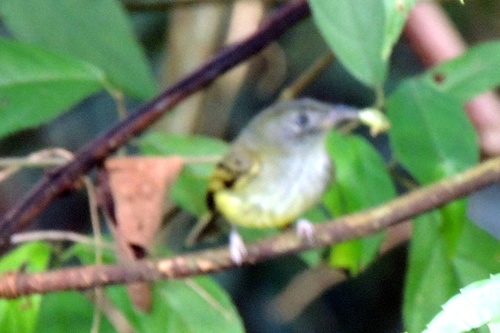
Northern Bentbill
Slate-headed Tody-Flycatcher
In short
The Northern Bentbill and Slate-headed Tody-Flycatcher can be distinguished by their bill shape and head coloration. The Bentbill has a distinctive short, broad, downcurved bill and a pale iris, while the Tody-Flycatcher features a dark gray head with a pale loral mark and two bold yellow wingbars.
Identification tips
- Bill shape: Look for the Bentbill's short, broad, downcurved bill. 2. Head coloration: Note the Tody-Flycatcher's dark gray head with a pale loral mark. 3. Wingbars: The Tody-Flycatcher has two bold yellow wingbars. 4. Iris color: The Bentbill has a pale iris. 5. Habitat preference: Observe the surrounding vegetation; dense shrubbery may indicate a Tody-Flycatcher.
Size
Both species are small flycatchers, but the Northern Bentbill appears slightly more robust due to its broader bill.
Plumage
The Northern Bentbill has a more uniform plumage with a pale iris, whereas the Slate-headed Tody-Flycatcher has a dark gray head contrasting with olive-green upperparts and two bold yellow wingbars.
Behaviour
Both species forage for insects, but the Bentbill often forages in the under- and midstory, while the Tody-Flycatcher prefers dense shrubbery and vine tangles.
Habitat
The Northern Bentbill is found at forest edges and relatively open forests, while the Slate-headed Tody-Flycatcher prefers dense shrubbery and overgrown vegetation.
Voice
Both species have calls that can sound frog-like, but specific vocal differences are not detailed in the sources.
Northern Bentbill · Slate-headed Tody-Flycatcher · My Tricky Birds