
Alondra Cornuda vs Cuitlacoche Piquilargo
Eremophila alpestris frente a Toxostoma longirostre
Juega un quiz con Alondra Cornuda y Cuitlacoche Piquilargo
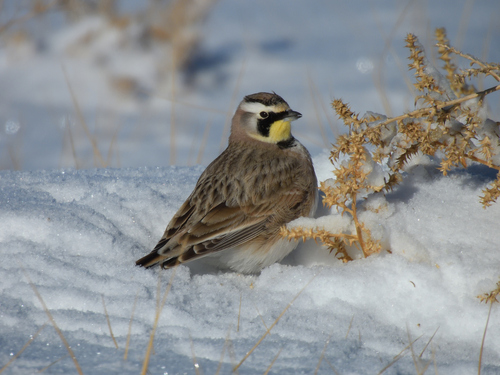 Alondra Cornuda
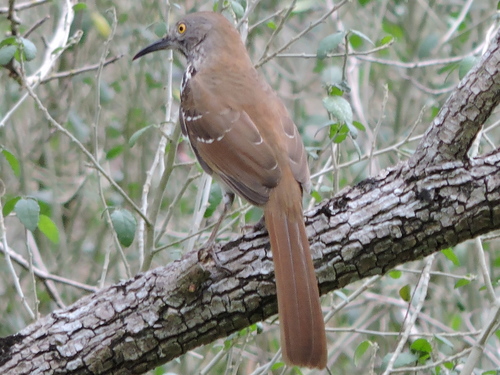 Cuitlacoche Piquilargo
En breve
La Alondra Cornuda y el Cuitlacoche Piquilargo se distinguen fácilmente por sus hábitats y comportamientos. La Alondra Cornuda se encuentra en áreas abiertas de Europa y Asia, mientras que el Cuitlacoche Piquilargo es residente de matorrales densos en el sur de Texas y el este de México. Su plumaje y estructura también son distintos, con la Alondra Cornuda teniendo un cuerpo más compacto y marcas faciales distintivas.
Consejos de identificación
Hábitat: Busca Alondras Cornudas en áreas abiertas, mientras que los Cuitlacoches Piquilargos están en matorrales densos. Marcas faciales: La Alondra Cornuda tiene una máscara negra y garganta amarilla. Forma del pico: El Cuitlacoche Piquilargo tiene un pico largo y ligeramente curvado.
Plumaje
La Alondra Cornuda tiene un patrón facial distintivo con una máscara negra y garganta amarilla, que está ausente en el Cuitlacoche Piquilargo. El Cuitlacoche Piquilargo tiene un plumaje marrón más uniforme con un pico largo y ligeramente curvado.
Comportamiento
La Alondra Cornuda normalmente forrajea en áreas abiertas, mientras que el Cuitlacoche Piquilargo forrajea en el suelo en matorrales densos y es conocido por sus vuelos cortos cerca del suelo.
Hábitat
La Alondra Cornuda se encuentra en áreas abiertas desde el Ártico hasta el norte de África, mientras que el Cuitlacoche Piquilargo está restringido a hábitats de matorrales densos en el sur de Texas y el este de México.
Alondra Cornuda · Cuitlacoche Piquilargo · Mis aves difíciles