
Cucarachero Cabeciblanco vs Cucarachero Ventrinegro
Campylorhynchus albobrunneus frente a Pheugopedius fasciatoventris
Juega un quiz con Cucarachero Cabeciblanco y Cucarachero Ventrinegro
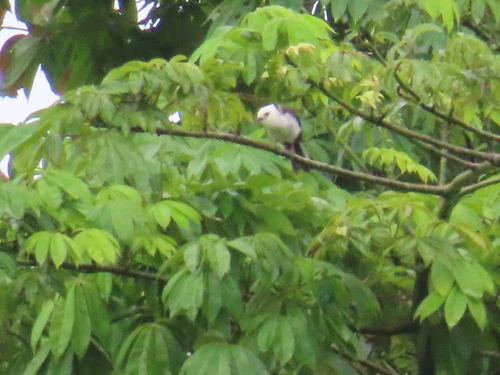 Cucarachero Cabeciblanco
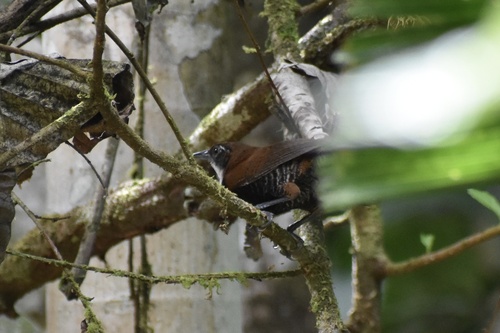 Cucarachero Ventrinegro
En breve
El Cucarachero Cabeciblanco se distingue por su cabeza y partes inferiores completamente blancas, en contraste con sus partes superiores marrón negruzcas. En contraste, el Cucarachero Ventrinegro carece de esta coloración de cabeza tan marcada y es conocido por sus duetos vocales. Estas especies pueden confundirse en rangos superpuestos, pero su plumaje y vocalizaciones proporcionan distinciones claras.
Consejos de identificación
- Busca la cabeza y partes inferiores blancas del Cucarachero Cabeciblanco.
- Escucha los duetos vocales del Cucarachero Ventrinegro.
- Considera el hábitat: los Cucaracheros Cabeciblancos se encuentran en bosques húmedos hasta 1500 m.
Plumaje
El Cucarachero Cabeciblanco tiene una cabeza y partes inferiores blancas llamativas con partes superiores marrón negruzcas, a veces con plumas blancas en el hombro. El Cucarachero Ventrinegro no comparte esta cabeza blanca y tiene una coloración general diferente.
Comportamiento
Los Cucaracheros Cabeciblancos a menudo se ven en pequeños grupos, forrajeando dentro de epífitas. El comportamiento del Cucarachero Ventrinegro no se detalla aquí.
Hábitat
Los Cucaracheros Cabeciblancos habitan bosques húmedos desde el nivel del mar hasta aproximadamente 1500 m. No se proporcionan detalles del hábitat para el Cucarachero Ventrinegro.
Voz
El Cucarachero Ventrinegro es conocido por sus vocalizaciones, incluyendo un llamado de 'cream-o-wheat', una rica canción masculina lenta y un 'dueto líquido rico' con canciones alternadas de machos y hembras. No se proporcionan detalles vocales para el Cucarachero Cabeciblanco.
Cucarachero Cabeciblanco · Cucarachero Ventrinegro · Mis aves difíciles