
Troglodyte à tête blanche vs Troglodyte à ventre noir
Campylorhynchus albobrunneus contre Pheugopedius fasciatoventris
Faire un quiz avec Troglodyte à tête blanche et Troglodyte à ventre noir
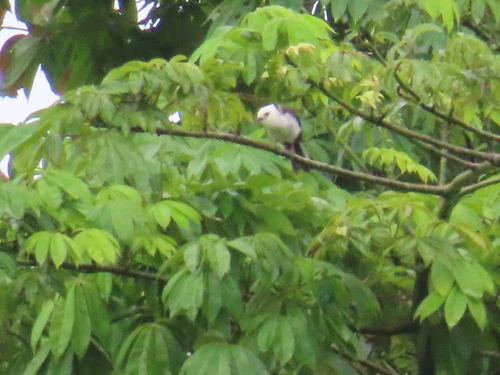 Troglodyte à tête blanche
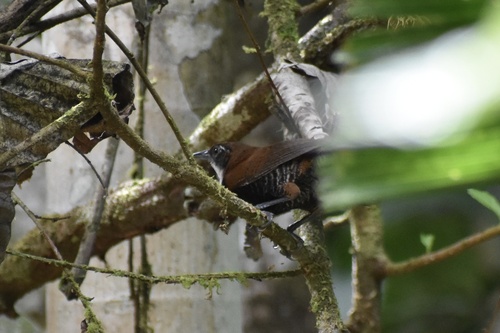 Troglodyte à ventre noir
En bref
Le Troglodyte à tête blanche se distingue par sa tête et ses parties inférieures entièrement blanches, contrastant avec son dos brun noirâtre. En revanche, le Troglodyte à ventre noir ne possède pas cette coloration de tête marquée et est connu pour ses duos vocaux. Ces espèces peuvent être confondues dans des zones de chevauchement, mais leur plumage et leurs vocalisations fournissent des distinctions claires.
Conseils d’identification
- Recherchez la tête et les parties inférieures blanches du Troglodyte à tête blanche.
- Écoutez les duos vocaux du Troglodyte à ventre noir.
- Considérez l'habitat : les Troglodytes à tête blanche se trouvent dans des forêts humides jusqu'à 1500 m.
Plumage
Le Troglodyte à tête blanche a une tête et des parties inférieures blanches frappantes avec un dos brun noirâtre, parfois avec des plumes blanches sur l'épaule. Le Troglodyte à ventre noir ne partage pas cette tête blanche et a une coloration globale différente.
Comportement
Les Troglodytes à tête blanche sont souvent vus en petits groupes, fouillant parmi les épiphytes. Le comportement du Troglodyte à ventre noir n'est pas détaillé ici.
Habitat
Les Troglodytes à tête blanche habitent des forêts humides de la mer jusqu'à environ 1500 m. Les détails de l'habitat pour le Troglodyte à ventre noir ne sont pas fournis.
Voix
Le Troglodyte à ventre noir est connu pour ses vocalisations, y compris un appel 'cream-o-wheat', une chanson masculine riche et lente, et un 'duo liquide riche' avec des chansons masculines et féminines alternées. Les détails vocaux pour le Troglodyte à tête blanche ne sont pas fournis.
Troglodyte à tête blanche · Troglodyte à ventre noir · Mes oiseaux difficiles