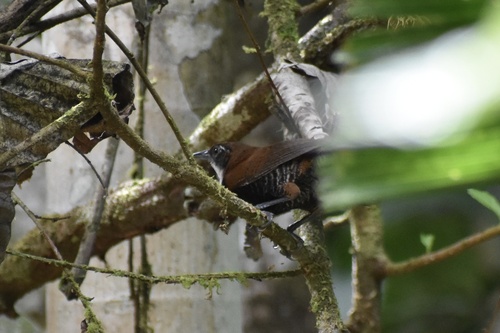
White-headed Wren vs Black-bellied Wren
Campylorhynchus albobrunneus versus Pheugopedius fasciatoventris
Play a quiz with White-headed Wren and Black-bellied Wren
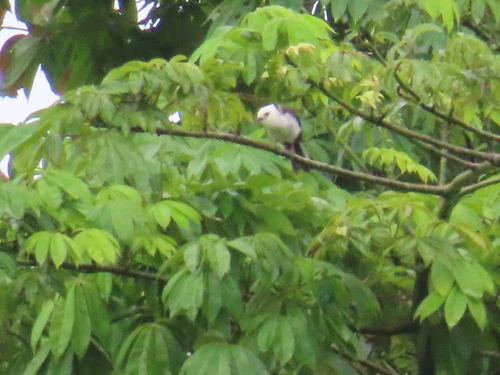
White-headed Wren
Black-bellied Wren
In short
The White-headed Wren is distinguished by its entirely white head and underparts, contrasting with its blackish-brown upperparts. In contrast, the Black-bellied Wren has a more uniform plumage with a distinctive black belly and lacks the stark white head. Both species inhabit similar forest environments but have different vocalizations.
Identification tips
- Look for the white head and underparts on the White-headed Wren. 2. Check for the black belly on the Black-bellied Wren. 3. Listen for the Black-bellied Wren's rich liquid duet. 4. Observe group behavior; White-headed Wrens often forage in small groups. 5. Note habitat use; White-headed Wrens forage in epiphytes.
Size
Both species are similar in size, typical of wrens, with no significant size difference noted.
Plumage
The White-headed Wren has a white head and underparts with blackish-brown upperparts, while the Black-bellied Wren features a black belly and lacks the white head, presenting a more uniform appearance.
Behaviour
White-headed Wrens are often seen in small groups and specialize in foraging within epiphytes. Black-bellied Wrens are less often noted for group behavior in the sources.
Habitat
Both species inhabit humid forests, but the White-headed Wren is noted for foraging specifically within epiphytes. The Black-bellied Wren's habitat preferences are less detailed in the sources.
Voice
The Black-bellied Wren is known for its rich, slow male song and a distinctive duet with the female. The White-headed Wren's vocalizations are not detailed in the sources, suggesting less distinctive calls.