
Énicure à dos noir vs Pipit à dos olive
Enicurus immaculatus contre Anthus hodgsoni
Faire un quiz avec Énicure à dos noir et Pipit à dos olive
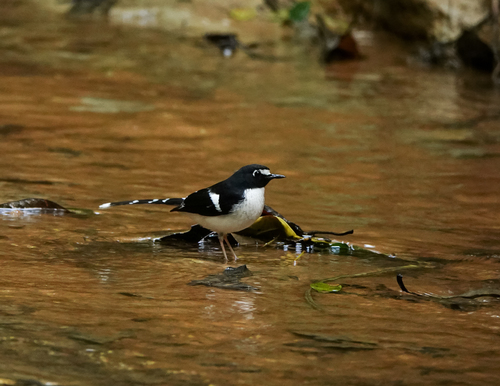 Énicure à dos noir
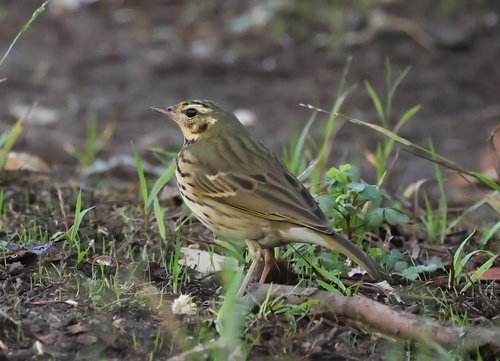 Pipit à dos olive
En bref
Le Énicure à dos noir et le Pipit à dos olive sont distincts tant par leur apparence que par leur comportement. L'Énicure est remarquable par son plumage noir et blanc frappant et sa longue queue fourchue, tandis que le Pipit a une coloration olive-brun plus sobre avec des parties inférieures striées. Ces espèces diffèrent également considérablement en termes de préférence d'habitat et de comportement.
Conseils d’identification
- Recherchez la longue queue fourchue et le plumage noir et blanc audacieux pour identifier l'Énicure à dos noir.
- Notez le dos olive-brun et les parties inférieures striées pour le Pipit à dos olive.
- Observez l'habitat : Énicures près de l'eau, Pipits dans des zones ouvertes.
Taille
L'Énicure à dos noir est généralement plus petit et plus élancé par rapport au Pipit à dos olive.
Plumage
L'Énicure à dos noir a un plumage noir et blanc distinctif avec un dos noir proéminent et une longue queue fourchue. En revanche, le Pipit à dos olive a un dos olive-brun avec des parties inférieures striées, manquant du contraste noir et blanc audacieux.
Comportement
L'Énicure à dos noir est souvent vu près de l'eau, hochant fréquemment sa queue, tandis que le Pipit à dos olive est plus terrestre, souvent trouvé marchant sur le sol à la recherche d'insectes.
Habitat
Les Énicures à dos noir se trouvent généralement près des ruisseaux et des rivières dans des zones forestières, tandis que les Pipits à dos olive préfèrent les bois ouverts, les prairies et parfois les parcs urbains.
Énicure à dos noir · Pipit à dos olive · Mes oiseaux difficiles