
Tyranneau omnicolore vs Pipromorphe à ventre roux
Tachuris rubrigastra contre Mionectes rufiventris
Faire un quiz avec Tyranneau omnicolore et Pipromorphe à ventre roux
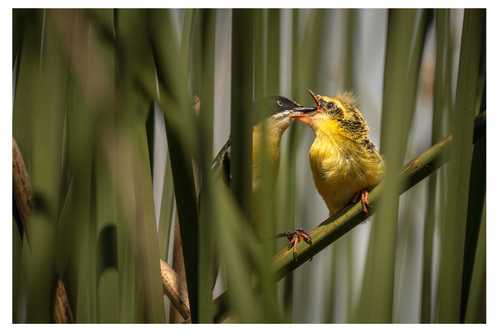 Tyranneau omnicolore
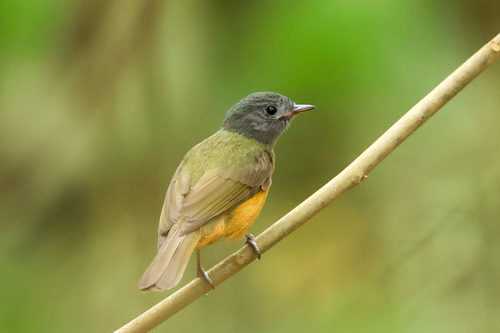 Pipromorphe à ventre roux
En bref
Le Tyranneau omnicolore est inconfondable avec son plumage vibrant, comprenant un sourcil jaune et une tache rouge à la nuque, tandis que le Pipromorphe à ventre roux est plus sobre avec des parties inférieures rousses et des parties supérieures vert olive. Le Tyranneau se trouve dans des marais à roseaux, tandis que le Pipromorphe habite des forêts humides. Ces préférences d'habitat sont essentielles pour les distinguer sur le terrain.
Conseils d’identification
Cherchez le plumage vibrant jaune et rouge du Tyranneau omnicolore dans des habitats marécageux. En revanche, le Pipromorphe à ventre roux se trouvera dans des forêts humides avec des tons rousses et vert olive. L'habitat est un indice crucial, car leurs aires de répartition et environnements ne se chevauchent pas significativement.
Plumage
Le Tyranneau omnicolore a une apparence frappante avec des parties inférieures et un sourcil entièrement jaunes, une gorge blanche, un manteau vert olive, des ailes et une queue noires avec un motif blanc audacieux, et une tache rouge à la nuque et sur les couvertures sous-caudales. En revanche, le Pipromorphe à ventre roux a des parties inférieures rousses et des parties supérieures et une queue vert olive, manquant des couleurs vives et des marques distinctes du Tyranneau.
Comportement
Le Tyranneau omnicolore cherche sa nourriture de manière acrobatique seul, en couples ou en petites familles, tandis que le Pipromorphe à ventre roux est connu pour son système de reproduction en lek et se nourrit à la fois d'insectes et de fruits.
Habitat
Le Tyranneau omnicolore se trouve dans des marais à roseaux et sur les bords des lacs, tandis que le Pipromorphe à ventre roux habite la végétation basse des forêts humides dans la région de la forêt atlantique.
Tyranneau omnicolore · Pipromorphe à ventre roux · Mes oiseaux difficiles