
Tyranneau ventru vs Tyranneau sylvain
Phylloscartes ventralis contre Phylloscartes sylviolus
Faire un quiz avec Tyranneau ventru et Tyranneau sylvain
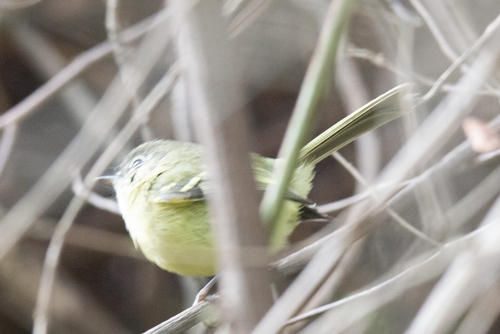 Tyranneau ventru
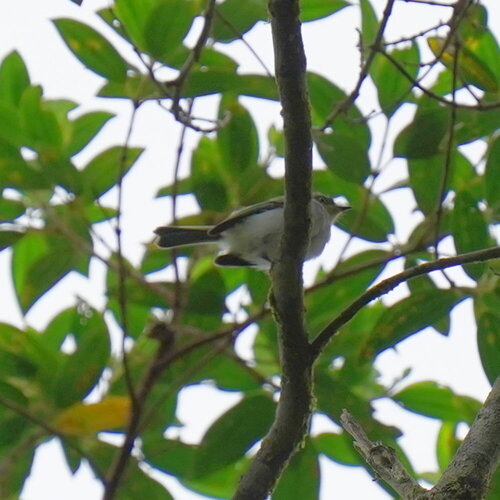 Tyranneau sylvain
En bref
Le Tyranneau ventru et le Tyranneau sylvain sont tous deux de petits oiseaux vert olive avec des comportements similaires, ce qui les rend difficiles à distinguer. Le Tyranneau ventru est noté pour ses marques blanches proéminentes sur les tertiaires et ses barres alaires évidentes, tandis que les détails spécifiques du plumage du Tyranneau sylvain ne sont pas fournis. Les deux espèces se perchent horizontalement et rejoignent des groupes d'espèces mixtes.
Conseils d’identification
Recherchez les marques blanches proéminentes sur les tertiaires et les barres alaires évidentes du Tyranneau ventru. Observez des comportements tels que le style de perche et les habitudes de regroupement, qui sont similaires dans les deux espèces.
Plumage
Le Tyranneau ventru a des marques blanches proéminentes sur les tertiaires et des barres alaires évidentes, qui sont typiques du genre. Les détails spécifiques du plumage du Tyranneau sylvain ne sont pas fournis.
Comportement
Les deux espèces se perchent largement horizontalement et tiennent leur queue au maximum légèrement inclinée. Elles rejoignent également régulièrement des groupes d'espèces mixtes et cherchent activement des invertébrés.
Habitat
Le Tyranneau ventru habite une gamme d'habitats forestiers à des altitudes comprises entre 1000 et 2200 m. Les détails de l'habitat du Tyranneau sylvain ne sont pas fournis.
Tyranneau ventru · Tyranneau sylvain · Mes oiseaux difficiles