
Birdr

Mottle-cheeked Tyrannulet vs Bay-ringed Tyrannulet

Phylloscartes ventralis versus Phylloscartes sylviolus

Play a quiz with Mottle-cheeked Tyrannulet and Bay-ringed Tyrannulet
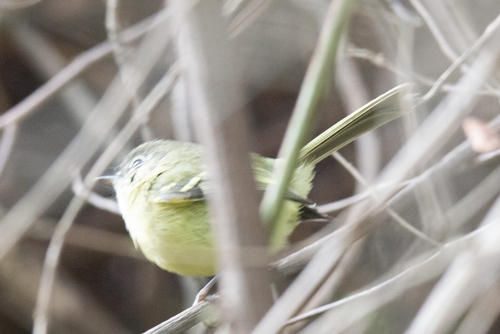
Mottle-cheeked Tyrannulet (Phylloscartes ventralis) Mottle-cheeked Tyrannulet
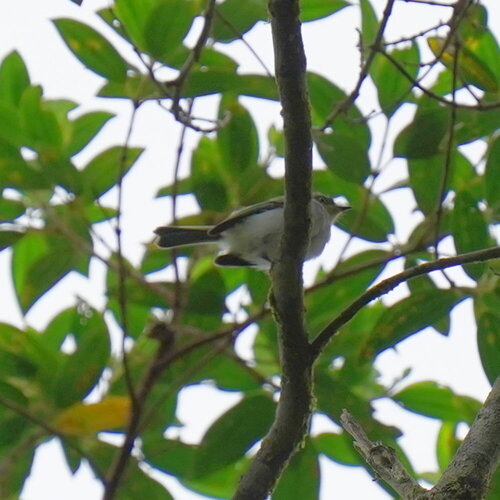
Bay-ringed Tyrannulet (Phylloscartes sylviolus) Bay-ringed Tyrannulet

Media

Loading…

In short

The Mottle-cheeked Tyrannulet and the Bay-ringed Tyrannulet are similar in structure and behavior but can be distinguished by subtle differences in plumage and habitat preferences. Both species are small, active flycatchers with olive-green tones, but the Mottle-cheeked has more prominent white markings on the tertials.

Identification tips

Look for white tertial markings on the Mottle-cheeked Tyrannulet. Observe the habitat: the Mottle-cheeked is found at higher altitudes. Both species are active and join mixed-species flocks, so focus on plumage details for identification.

Size

Both species are small tyrannulets with similar size and structure.

Plumage

The Mottle-cheeked Tyrannulet is principally olive-green above with prominent white markings on the tertials and obvious wingbars. The Bay-ringed Tyrannulet also has an olive-green coloration but lacks the distinctive white tertial markings.

Behaviour

Both species join mixed-species flocks and forage actively for invertebrates. They perch horizontally and hold their tails slightly cocked.

Habitat

The Mottle-cheeked Tyrannulet inhabits a range of forest habitats at altitudes between 1000–2200 m. The Bay-ringed Tyrannulet's specific habitat preferences are less detailed but are generally similar.

Submit a better description

Use the same sections as the comparison. Your text is published immediately.

The Mottle-cheeked Tyrannulet and the Bay-ringed Tyrannulet are similar in structure and behavior but can be distinguished by subtle differences in plumage and habitat preferences. Both species are small, active flycatchers with olive-green tones, but the Mottle-cheeked has more prominent white markings on the tertials.

Look for white tertial markings on the Mottle-cheeked Tyrannulet. Observe the habitat: the Mottle-cheeked is found at higher altitudes. Both species are active and join mixed-species flocks, so focus on plumage details for identification.

Both species are small tyrannulets with similar size and structure.

The Mottle-cheeked Tyrannulet is principally olive-green above with prominent white markings on the tertials and obvious wingbars. The Bay-ringed Tyrannulet also has an olive-green coloration but lacks the distinctive white tertial markings.

Both species join mixed-species flocks and forage actively for invertebrates. They perch horizontally and hold their tails slightly cocked.

The Mottle-cheeked Tyrannulet inhabits a range of forest habitats at altitudes between 1000–2200 m. The Bay-ringed Tyrannulet's specific habitat preferences are less detailed but are generally similar.

Discard your changes?

You have unsaved edits. If you leave now, those changes will be lost.

Mottle-cheeked Tyrannulet · Bay-ringed Tyrannulet · My Tricky Birds