
Mottle-cheeked Tyrannulet vs Bay-ringed Tyrannulet
Phylloscartes ventralis contro Phylloscartes sylviolus
Fai un quiz con Mottle-cheeked Tyrannulet e Bay-ringed Tyrannulet
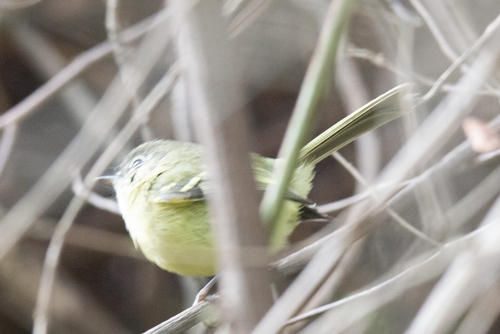 Mottle-cheeked Tyrannulet
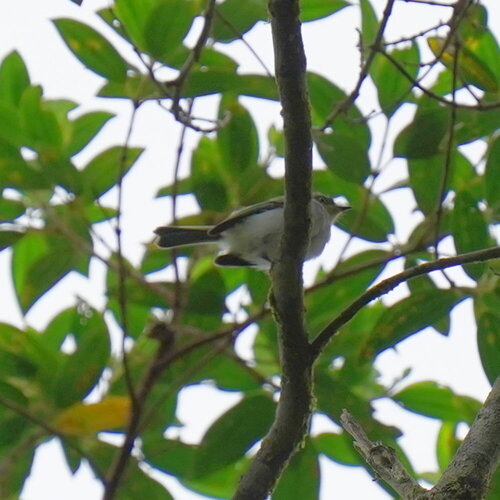 Bay-ringed Tyrannulet
In breve
Il Mottle-cheeked Tyrannulet e il Bay-ringed Tyrannulet sono entrambi piccoli uccelli di colore verde oliva con comportamenti simili, rendendoli difficili da distinguere. Il Mottle-cheeked Tyrannulet è noto per i suoi marcatori bianchi prominenti sulle terziarie e per le barre alari evidenti, mentre i dettagli specifici del piumaggio per il Bay-ringed Tyrannulet non sono forniti. Entrambe le specie si posano orizzontalmente e si uniscono a stormi misti.
Consigli di identificazione
Cerca i marcatori bianchi prominenti sulle terziarie e le barre alari evidenti del Mottle-cheeked Tyrannulet. Osserva comportamenti come lo stile di posarsi e le abitudini di stormo, che sono simili in entrambe le specie.
Piumaggio
Il Mottle-cheeked Tyrannulet ha marcatori bianchi prominenti sulle terziarie e barre alari evidenti, che sono tipici del genere. I dettagli specifici del piumaggio per il Bay-ringed Tyrannulet non sono forniti.
Comportamento
Entrambe le specie si posano ampiamente orizzontalmente e tengono le loro code al massimo leggermente inclinate. Si uniscono anche regolarmente a stormi misti e cercano attivamente invertebrati.
Habitat
Il Mottle-cheeked Tyrannulet abita una gamma di habitat forestali a altitudini comprese tra 1000 e 2200 m. I dettagli dell'habitat per il Bay-ringed Tyrannulet non sono forniti.
Mottle-cheeked Tyrannulet · Bay-ringed Tyrannulet · I miei uccelli difficili