
Goéland à bec cerclé vs Goéland leucophée
Larus delawarensis contre Larus michahellis
Faire un quiz avec Goéland à bec cerclé et Goéland leucophée
 Goéland à bec cerclé
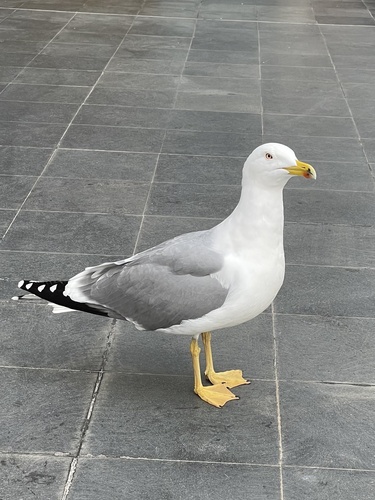 Goéland leucophée
En bref
Le Goéland à bec cerclé est facilement identifiable grâce à son anneau noir distinctif autour du bec, tandis que le Goéland leucophée a une constitution plus robuste et ne possède pas cette caractéristique. Les deux espèces sont des mangeurs opportunistes, mais leurs habitats et comportements peuvent différer significativement.
Conseils d’identification
Vérifiez le bec : Recherchez un anneau noir sur le bec pour le Goéland à bec cerclé. Observez la taille et la structure : Notez la taille plus grande et la constitution plus robuste du Goéland leucophée. Considérez l'emplacement : Les Goélands à bec cerclé sont plus susceptibles d'être en Amérique du Nord, tandis que les Goélands leucophées se trouvent en Europe.
Taille
Le Goéland leucophée est généralement plus grand et plus robuste que le Goéland à bec cerclé.
Plumage
Le Goéland à bec cerclé a un anneau noir autour de son bec, qui est absent chez le Goéland leucophée. Le Goéland leucophée a généralement un dos gris plus solide par rapport au gris plus pâle du Goéland à bec cerclé.
Habitat
Le Goéland à bec cerclé se trouve souvent dans les zones urbaines d'Amérique du Nord et près des plans d'eau, tandis que le Goéland leucophée est plus commun dans les régions côtières d'Europe et peut être trouvé en train de nicher sur des structures artificielles.
Goéland à bec cerclé · Goéland leucophée · Mes oiseaux difficiles