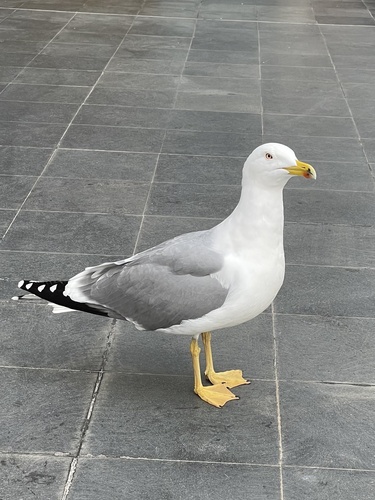
Ring-billed Gull vs Yellow-legged Gull
Larus delawarensis versus Larus michahellis
Play a quiz with Ring-billed Gull and Yellow-legged Gull
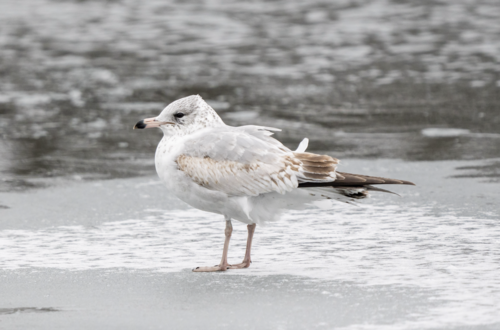
Ring-billed Gull
Yellow-legged Gull
In short
The Ring-billed Gull (Larus delawarensis) and the Yellow-legged Gull (Larus michahellis) can be distinguished by their bill markings and leg color. The Ring-billed Gull has a distinctive black ring around its bill, while the Yellow-legged Gull has a solid yellow bill often with a red spot near the tip. Leg color is another key difference: the Ring-billed Gull has yellowish legs, whereas the Yellow-legged Gull has bright yellow legs.
Identification tips
- Look for the black ring on the bill of the Ring-billed Gull.
- Check leg color: Ring-billed has yellowish legs, Yellow-legged has bright yellow legs.
- Note size and bulk: Yellow-legged is larger and more robust.
- Observe habitat: Ring-billed is more likely inland, Yellow-legged is coastal.
- Use plumage tone as a secondary check: Yellow-legged has a darker gray mantle.
Size
The Yellow-legged Gull is generally larger and bulkier than the Ring-billed Gull.
Plumage
Both species have white heads and bodies with gray wings, but the Yellow-legged Gull tends to have a darker gray mantle. The Ring-billed Gull has a more delicate appearance with a lighter gray back.
Behaviour
Both species are opportunistic feeders, but the Yellow-legged Gull is known for more aggressive kleptoparasitic behavior.
Habitat
Ring-billed Gulls are often found inland near lakes and rivers, while Yellow-legged Gulls are more coastal, often nesting on cliffs and rooftops in urban areas.
Voice
Vocalizations are similar and not a reliable distinguishing feature in the field.