
Combattant varié vs Bécasseau violet
Calidris pugnax contre Calidris maritima
Faire un quiz avec Combattant varié et Bécasseau violet
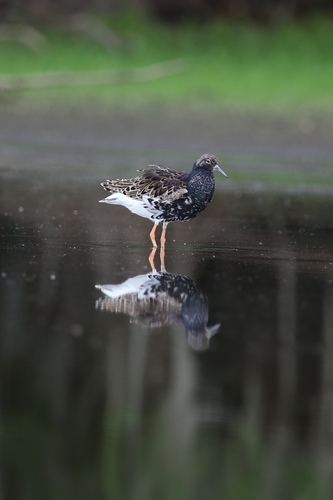 Combattant varié
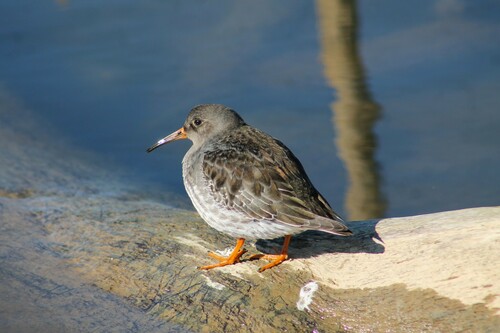 Bécasseau violet
En bref
Le Combattant varié et le Bécasseau violet peuvent être distingués par leur plumage et leur comportement. Les Combattants variés ont un plumage plus variable, surtout chez les mâles en période de reproduction, tandis que les Bécasseaux violets montrent une couleur ardoise à charbon avec une légère teinte violette en hiver. Comportementalement, les Bécasseaux violets sont plus susceptibles d'être trouvés dans des zones côtières rocheuses et sont approchables en hiver.
Conseils d’identification
- Plumage : Recherchez le plumage variable et élaboré des Combattants variés, surtout chez les mâles en période de reproduction, par rapport à la couleur ardoise à charbon constante des Bécasseaux violets en hiver.
- Comportement : Notez la nature approchable des Bécasseaux violets en hiver et leur tendance à rester près du sol lorsqu'ils sont dérangés.
- Habitat : Vérifiez les zones côtières rocheuses, qui sont plus typiques des Bécasseaux violets.
Plumage
Les Combattants variés présentent un plumage hautement variable, en particulier chez les mâles en période de reproduction, qui peuvent avoir des collerettes et des touffes élaborées. En revanche, les Bécasseaux violets ont des parties supérieures ardoise à charbon avec une légère teinte violette en hiver, et des reflets plus colorés en châtaigne et beige en été.
Comportement
Les Bécasseaux violets sont assez approchables en hiver et ont tendance à voler seulement sur une courte distance lorsqu'ils sont dérangés. Ils effectuent des parades nuptiales aériennes et une démonstration de Rodent Run sur les lieux de reproduction. Les Combattants variés n'exhibent pas ces comportements spécifiques.
Habitat
Les Bécasseaux violets se trouvent généralement dans des zones côtières rocheuses, surtout en hiver. Les Combattants variés ne sont pas spécifiquement associés à ce type d'habitat.
Combattant varié · Bécasseau violet · Mes oiseaux difficiles