
Bécasseau à échasses vs Bécasseau à longs doigts
Calidris himantopus contre Calidris subminuta
Faire un quiz avec Bécasseau à échasses et Bécasseau à longs doigts
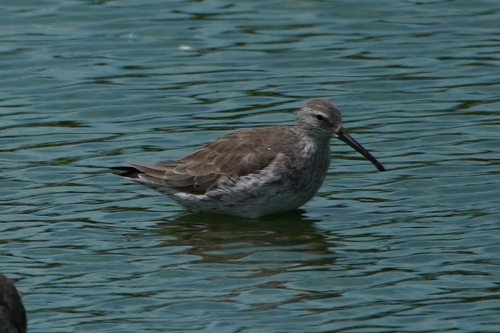 Bécasseau à échasses
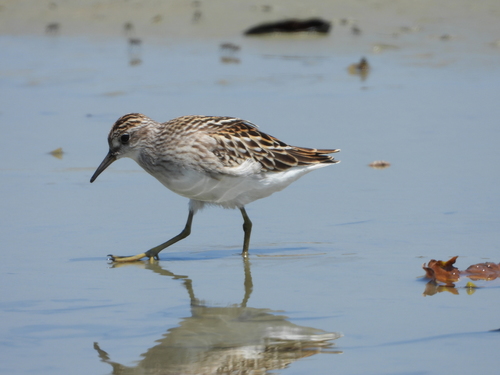 Bécasseau à longs doigts
En bref
Bécasseau à échasses et Bécasseau à longs doigts peuvent être distingués par leurs différences structurelles : le Bécasseau à échasses a des jambes plus longues et un cou plus allongé par rapport au plus petit et plus compact Bécasseau à longs doigts. En vol, les doigts du Bécasseau à longs doigts dépassent de la queue, contrairement au Bécasseau à échasses.
Conseils d’identification
- Look for the longer legs and neck of the Bécasseau à échasses compared to the compact shape of the Bécasseau à longs doigts.
- In flight, check if the toes project beyond the tail; this is a feature of the Bécasseau à longs doigts.
- Note the presence of a rufous crown and ear-coverts in Bécasseau à longs doigts, absent in Bécasseau à échasses.
- Listen for the Bécasseau à longs doigts's trilling and rolling calls.
Taille
Bécasseau à échasses is generally larger with longer legs and neck, while Bécasseau à longs doigts is smaller and more compact.
Plumage
Bécasseau à échasses lacks the rufous crown and ear-coverts seen in Bécasseau à longs doigts. Bécasseau à longs doigts has a prominent whitish supercilium and a rufous-tinged breast, whereas the Bécasseau à échasses does not display these features.
Voix
Bécasseau à longs doigts's calls include a trilling “chee” or “prrrt” and a soft rolling “kurrip”, which are not mentioned for Bécasseau à échasses.
Bécasseau à échasses · Bécasseau à longs doigts · Mes oiseaux difficiles