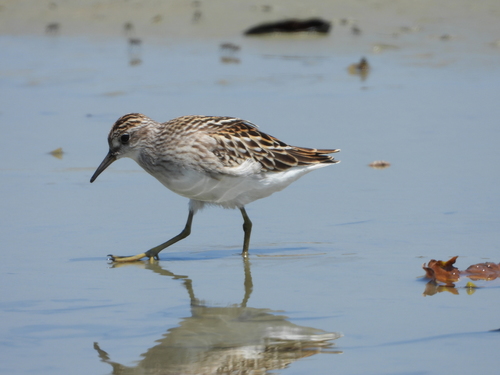
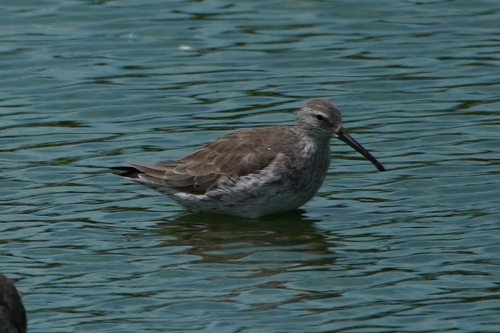
Stilt Sandpiper vs Long-toed Stint
Calidris himantopus versus Calidris subminuta
Play a quiz with Stilt Sandpiper and Long-toed Stint
Stilt Sandpiper
Long-toed Stint
In short
The Stilt Sandpiper and Long-toed Stint can be distinguished by their size and habitat preferences. The Stilt Sandpiper is larger and often found in deeper water, while the Long-toed Stint is smaller with distinct plumage features like a rufous crown and long toes projecting beyond the tail in flight.
Identification tips
- Size: Look for the larger size of the Stilt Sandpiper. 2. Plumage: Note the rufous crown and prominent supercilium of the Long-toed Stint. 3. Feet: Check if the toes project beyond the tail in flight for the Long-toed Stint. 4. Habitat: Observe the water depth; Stilt Sandpipers often forage in deeper water. 5. Vocalizations: Listen for the Long-toed Stint's trilling calls.
Size
The Stilt Sandpiper is larger than the Long-toed Stint, with the latter being a small, slim stint.
Plumage
The Long-toed Stint has a rufous crown and ear-coverts with dark streaks, a prominent whitish supercilium, and long toes that project beyond the tail in flight. The Stilt Sandpiper lacks these specific plumage features.
Behaviour
The Stilt Sandpiper often forages in belly-deep water, unlike the Long-toed Stint which is more terrestrial.
Habitat
Stilt Sandpipers prefer pools or lagoons, while Long-toed Stints are found in a variety of wetland habitats but are less likely to be in deep water.
Voice
The Long-toed Stint has a series of purring calls and trilling sounds, while specific vocalizations for the Stilt Sandpiper are not detailed.