
Maubèche des champs vs Passerin azuré
Bartramia longicauda contre Passerina amoena
Faire un quiz avec Maubèche des champs et Passerin azuré
 Maubèche des champs
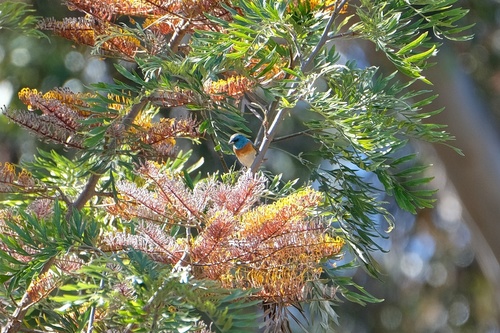 Passerin azuré
En bref
La Maubèche des champs et le Passerin azuré se distinguent facilement par leur habitat et leur apparence. La Maubèche des champs est un oiseau de rivage avec de longues pattes et un corps mince et allongé, tandis que le Passerin azuré est un petit oiseau chanteur coloré que l'on trouve souvent dans des habitats broussailleux.
Conseils d’identification
1. Habitat : Recherchez des Maubèches des champs dans des champs ouverts et des prairies, tandis que les Passerins azurés sont plus susceptibles de se trouver dans des zones broussailleuses ou aux mangeoires. 2. Taille et forme : Les Maubèches des champs sont plus grandes avec de longues pattes ; les Passerins azurés sont petits et compacts. 3. Plumage : Notez le bleu vif et l'orange du Passerin azuré par rapport aux tons plus discrets de la Maubèche des champs.
Taille
La Maubèche des champs est significativement plus grande que le Passerin azuré, avec un corps plus allongé et des pattes plus longues.
Plumage
La Maubèche des champs a un plumage plus atténué, brun et fauve, typique des oiseaux de rivage, tandis que le Passerin azuré, en particulier le mâle, est connu pour son plumage bleu vif et sa poitrine orange contrastante.
Habitat
Les Maubèches des champs se trouvent généralement dans des prairies ouvertes et des champs, tandis que les Passerins azurés fréquentent des habitats broussailleux et sont souvent vus aux mangeoires.
Voix
Le Passerin azuré est un chanteur persistant avec un chant varié, tandis que les vocalisations de la Maubèche des champs ne sont pas connues pour leur complexité.
Maubèche des champs · Passerin azuré · Mes oiseaux difficiles