
Dendrocygne veuf vs Paruline masquée
Dendrocygna viduata contre Geothlypis trichas
Faire un quiz avec Dendrocygne veuf et Paruline masquée
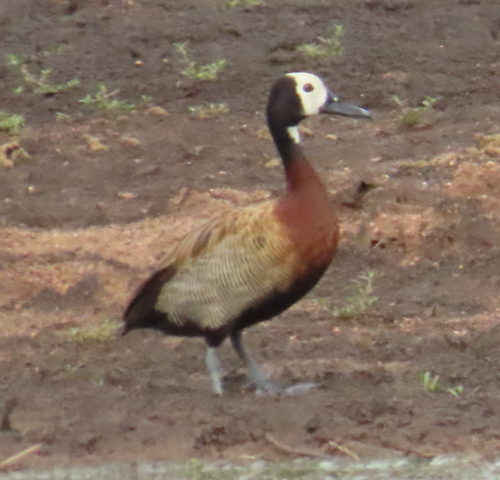 Dendrocygne veuf
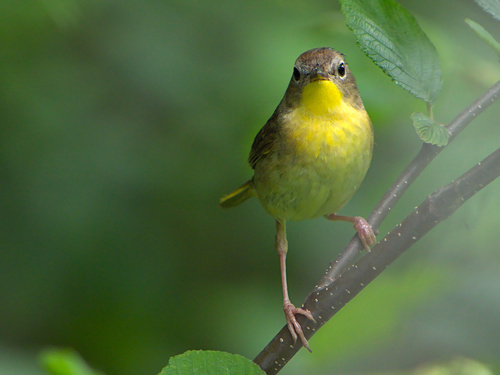 Paruline masquée
En bref
Le Dendrocygne veuf et la Paruline masquée se distinguent facilement par leur taille et leurs préférences d'habitat. Le canard est un grand oiseau aquatique avec un visage blanc distinctif, tandis que la paruline est un petit oiseau chanteur avec un masque noir frappant chez les mâles.
Conseils d’identification
Taille et habitat sont les indicateurs les plus fiables : le canard est beaucoup plus grand et se trouve dans des eaux ouvertes, tandis que la paruline est un petit oiseau de végétation dense. Différences de plumage sont également claires : cherchez le visage blanc du canard et la gorge jaune de la paruline avec son masque noir.
Taille
Le Dendrocygne veuf est significativement plus grand que la Paruline masquée, étant un oiseau aquatique comparé à un petit oiseau chanteur.
Plumage
Le Dendrocygne veuf a un visage blanc et un corps sombre, tandis que la Paruline masquée, en particulier le mâle, a une gorge jaune vive et un masque noir.
Habitat
Le Dendrocygne veuf se trouve généralement dans des zones humides et des eaux ouvertes, tandis que la Paruline masquée est plus souvent observée dans des zones denses et broussailleuses ainsi que dans des marais.
Dendrocygne veuf · Paruline masquée · Mes oiseaux difficiles