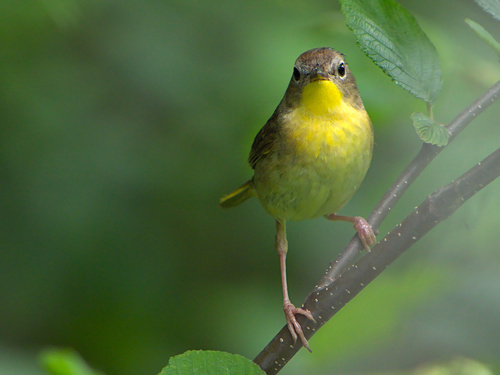
White-faced Whistling-Duck vs Common Yellowthroat
Dendrocygna viduata versus Geothlypis trichas
Play a quiz with White-faced Whistling-Duck and Common Yellowthroat
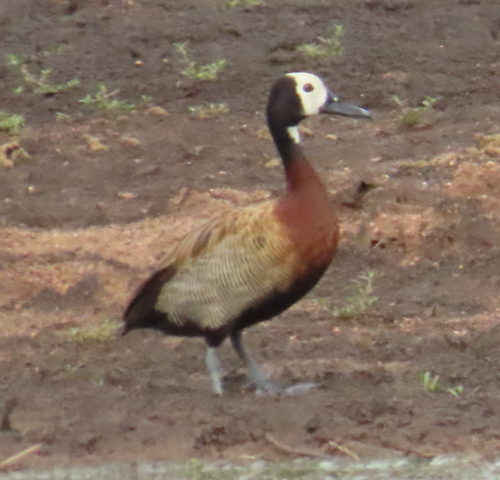
White-faced Whistling-Duck
Common Yellowthroat
In short
The White-faced Whistling-Duck and Common Yellowthroat are easily distinguished by their size and habitat preferences. The former is a large waterfowl with a distinctive white face, while the latter is a small, ground-dwelling warbler with a striking black mask in males.
Identification tips
- Size and Shape: Look for the large size and long neck of the duck versus the small, compact shape of the warbler. 2. Plumage: Identify the white face of the duck and the black mask on the male yellowthroat. 3. Habitat: Note the presence of water for the duck and dense vegetation for the yellowthroat. 4. Vocalization: Listen for the whistling of the duck and the 'witchety' song of the yellowthroat.
Size
The White-faced Whistling-Duck is significantly larger than the Common Yellowthroat, being a duck compared to a small songbird.
Plumage
The White-faced Whistling-Duck has a white face, dark brown body, and long neck, whereas the Common Yellowthroat male has a bright yellow throat and a distinctive black mask across the eyes. Females and juveniles of the Yellowthroat lack the mask and are more uniformly olive.
Behaviour
White-faced Whistling-Ducks are often seen in flocks near water, while Common Yellowthroats are solitary or in pairs, skulking in dense vegetation.
Habitat
White-faced Whistling-Ducks are found in wetlands and open water bodies, whereas Common Yellowthroats prefer marshes, wet fields, and dense shrubbery.
Voice
The White-faced Whistling-Duck is known for its whistling calls, while the Common Yellowthroat has a distinctive 'witchety-witchety-witchety' song.
White-faced Whistling-Duck · Common Yellowthroat · My Tricky Birds