
Fiery-necked Nightjar vs Marico Flycatcher
Caprimulgus pectoralis contro Bradornis mariquensis
Fai un quiz con Fiery-necked Nightjar e Marico Flycatcher
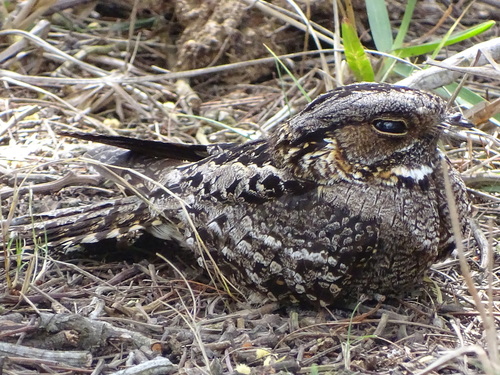 Fiery-necked Nightjar
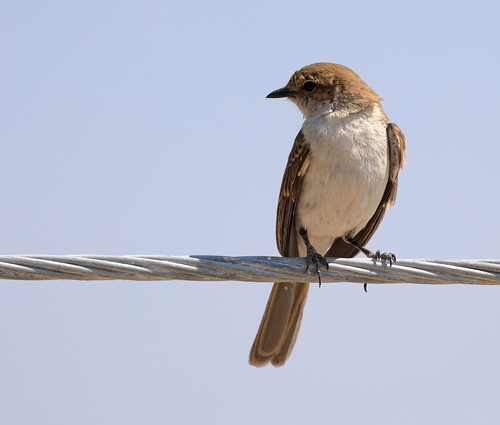 Marico Flycatcher
In breve
Il Fiery-necked Nightjar e il Marico Flycatcher sono distinti nella struttura e nel comportamento. Il nightjar è un uccello notturno con un piumaggio criptico adatto al camuffamento, mentre il flycatcher è diurno e più attivo, spesso visto posato in modo aperto. I loro habitat e vocalizzazioni differiscono anche significativamente.
Consigli di identificazione
Cerca il Fiery-necked Nightjar al crepuscolo o all'alba, quando il suo piumaggio criptico e le abitudini notturne sono più evidenti. Il Marico Flycatcher è più probabile che venga visto durante il giorno, posato apertamente negli habitat di savana.
Piumaggio
Il Fiery-necked Nightjar ha un piumaggio criptico con marroni e grigi maculati, che fornisce un eccellente camuffamento contro il suolo della foresta. Al contrario, il Marico Flycatcher ha un piumaggio più uniforme e chiaro, che appare spesso grigio-marrone, meno criptico e più adatto agli ambienti aperti.
Comportamento
Il Fiery-necked Nightjar è principalmente notturno, spesso visto riposare durante il giorno e attivo di notte. Il Marico Flycatcher è diurno, attivamente in cerca di cibo e posato in aree aperte durante le ore di luce.
Habitat
I Fiery-necked Nightjars si trovano tipicamente in aree boschive, utilizzando il loro piumaggio criptico per mimetizzarsi tra le foglie. I Marico Flycatchers preferiscono savane aperte e paesaggi dominati da acacie, dove possono essere visti posati in modo evidente.
Fiery-necked Nightjar · Marico Flycatcher · I miei uccelli difficili