
Birdr

Otarda vs Gruccione egiziano

Otis tarda contro Merops persicus

Fai un quiz con Otarda e Gruccione egiziano
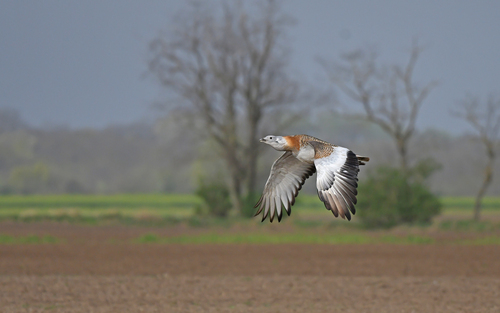
Otarda (Otis tarda) Otarda
Gruccione egiziano (Merops persicus) Gruccione egiziano

Media

Caricamento…

In breve

L'Otarda e il Gruccione egiziano si distinguono facilmente per dimensioni e forma: l'Otarda è un grande uccello terrestre, mentre il Gruccione egiziano è un uccello più piccolo e snello con una lunga coda e ali appuntite. Queste specie occupano habitat diversi e hanno comportamenti distinti.

Consigli di identificazione

Cerca le grandi dimensioni e il comportamento terrestre dell'Otarda nei campi aperti. Al contrario, il Gruccione egiziano può essere identificato per le sue dimensioni più piccole, il piumaggio verde vivace e il comportamento di cattura degli insetti in volo.

Taglia

L'Otarda è significativamente più grande del Gruccione egiziano, con un corpo robusto e lunghe gambe, rispetto al corpo snello del Gruccione e alle sue lunghe ali appuntite.

Piumaggio

L'Otarda ha un piumaggio prevalentemente marrone e bianco, mentre il Gruccione egiziano è caratterizzato dal suo piumaggio verde vivace con guance blu.

Comportamento

Le Otarde vengono tipicamente viste camminare a terra nei campi aperti, mentre i Gruccioni egiziani vengono spesso osservati volare nei cieli aperti, catturando insetti in volo.

Habitat

Le Otarde si trovano in prati aperti e campi agricoli, mentre i Gruccioni egiziani preferiscono aree aperte vicino all'acqua, come le rive dei fiumi e le zone umide.

Invia una descrizione migliore

Usa le stesse sezioni del confronto. Il testo viene pubblicato subito.

The Great Bustard and Blue-cheeked Bee-eater are easily distinguished by size and shape: the Great Bustard is a large, ground-dwelling bird, while the Blue-cheeked Bee-eater is a smaller, slender bird with a long tail and pointed wings. These species occupy different habitats and have distinct behaviors.

Look for the Great Bustard's large size and ground-dwelling behavior in open fields. In contrast, the Blue-cheeked Bee-eater can be identified by its smaller size, vibrant green plumage, and aerial insect-catching behavior.

The Great Bustard is significantly larger than the Blue-cheeked Bee-eater, with a robust body and long legs, compared to the Bee-eater's slender body and long, pointed wings.

The Great Bustard has a predominantly brown and white plumage, while the Blue-cheeked Bee-eater is characterized by its vibrant green plumage with blue cheeks.

Great Bustards are typically seen walking on the ground in open fields, whereas Blue-cheeked Bee-eaters are often observed flying in open skies, catching insects mid-air.

Great Bustards are found in open grasslands and agricultural fields, while Blue-cheeked Bee-eaters prefer open areas near water, such as riverbanks and wetlands.

Scartare le modifiche?

Hai modifiche non salvate. Se esci ora, andranno perse.

Otarda · Gruccione egiziano · I miei uccelli difficili