
Greater Honeyguide vs Red-headed Weaver
Indicator indicator contro Anaplectes rubriceps
Fai un quiz con Greater Honeyguide e Red-headed Weaver
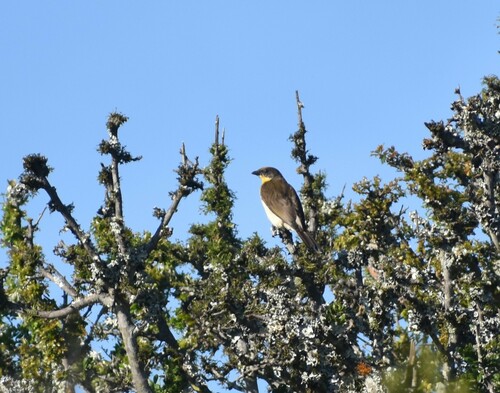 Greater Honeyguide
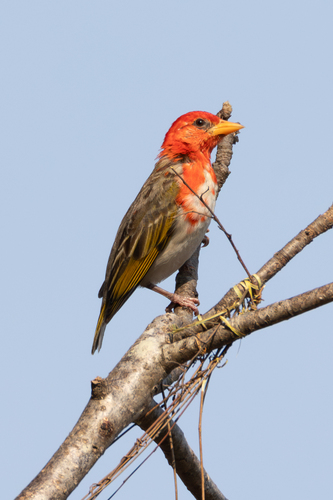 Red-headed Weaver
In breve
Il Greater Honeyguide e il Red-headed Weaver sono distinti nell'aspetto e nelle preferenze di habitat. Il Greater Honeyguide è noto per il suo ruolo nel guidare gli esseri umani verso i nidi delle api, mentre il Red-headed Weaver è notevole per la sua testa rossa e le sue intricate abitudini di costruzione del nido.
Consigli di identificazione
Cerca la testa rossa: Il Red-headed Weaver ha una testa rossa sorprendente, specialmente nei maschi, che è assente nel Greater Honeyguide. Osserva il comportamento: Se l'uccello sta guidando esseri umani o animali verso i nidi delle api, è probabile che sia un Greater Honeyguide. Controlla l'habitat: Se ti trovi in una savana o in un bosco ben alberato, potresti osservare un Red-headed Weaver.
Piumaggio
Il Greater Honeyguide manca della vivace testa rossa del Red-headed Weaver. Invece, ha un piumaggio più tenue, generalmente meno colorato. Il Red-headed Weaver, specialmente i maschi, ha una testa rossa distintiva che è una caratteristica chiave per l'identificazione.
Comportamento
Il Greater Honeyguide è famoso per il suo comportamento unico di guidare gli esseri umani verso i nidi delle api. Al contrario, il Red-headed Weaver è noto per la sua costruzione del nido, creando nidi sospesi con lunghi tunnel d'ingresso.
Habitat
Il Greater Honeyguide può essere trovato in una varietà di habitat dove sono presenti le api. Il Red-headed Weaver abita boschi a foglia larga, bushveld, miombo e savane di acacia ben alberate, principalmente in regioni subtropicali e tropicali umide.
Greater Honeyguide · Red-headed Weaver · I miei uccelli difficili