Birdr

Greater Honeyguide vs Red-headed Weaver

Indicator indicator versus Anaplectes rubriceps

Play a quiz with Greater Honeyguide and Red-headed Weaver
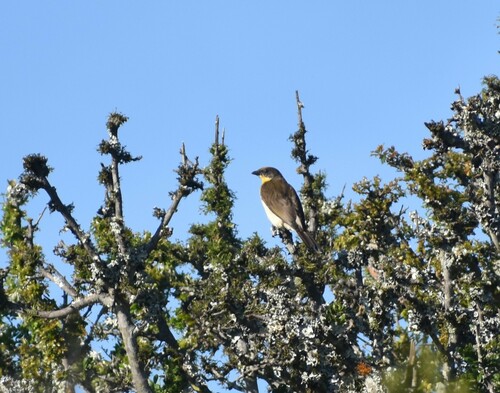
Greater Honeyguide (Indicator indicator) Greater Honeyguide
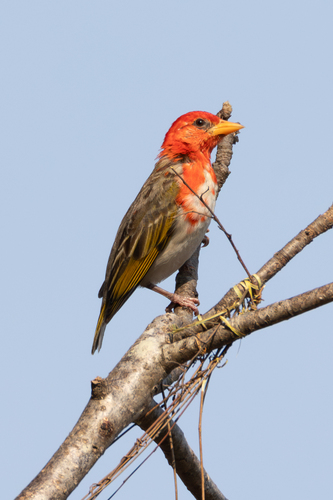
Red-headed Weaver (Anaplectes rubriceps) Red-headed Weaver

Media

Loading…

In short

The Greater Honeyguide and Red-headed Weaver are distinct in appearance and behavior. The honeyguide is known for its pale plumage and association with honey-seeking, while the weaver is notable for its vibrant red head and intricate nest-building.

Identification tips

Look for the red head of the male Red-headed Weaver and its nest-building behavior. The Greater Honeyguide is more likely to be seen leading to beehives and has a paler, streaked plumage. Consider habitat and behavior for additional clues.

Size

The Greater Honeyguide is slightly larger than the Red-headed Weaver.

Plumage

The Greater Honeyguide has a more subdued plumage with a pale, streaked appearance, while the Red-headed Weaver, especially males, is striking with a bright red head and contrasting body.

Behaviour

Greater Honeyguides are known for leading humans and animals to beehives, whereas Red-headed Weavers are social and often seen in mixed-species flocks, building intricate nests with long entrance tunnels.

Habitat

Greater Honeyguides are found in a variety of habitats including woodlands and savannas, while Red-headed Weavers prefer broadleaf woodland, bushveld, and well-wooded savannas.

Voice

Vocalizations are not a primary distinguishing feature between these species in field identification.

Submit a better description

Use the same sections as the comparison. Your text is published immediately.

The Greater Honeyguide and Red-headed Weaver are distinct in appearance and behavior. The honeyguide is known for its pale plumage and association with honey-seeking, while the weaver is notable for its vibrant red head and intricate nest-building.

Look for the red head of the male Red-headed Weaver and its nest-building behavior. The Greater Honeyguide is more likely to be seen leading to beehives and has a paler, streaked plumage. Consider habitat and behavior for additional clues.

The Greater Honeyguide is slightly larger than the Red-headed Weaver.

The Greater Honeyguide has a more subdued plumage with a pale, streaked appearance, while the Red-headed Weaver, especially males, is striking with a bright red head and contrasting body.

Greater Honeyguides are known for leading humans and animals to beehives, whereas Red-headed Weavers are social and often seen in mixed-species flocks, building intricate nests with long entrance tunnels.

Greater Honeyguides are found in a variety of habitats including woodlands and savannas, while Red-headed Weavers prefer broadleaf woodland, bushveld, and well-wooded savannas.

Vocalizations are not a primary distinguishing feature between these species in field identification.

Discard your changes?

You have unsaved edits. If you leave now, those changes will be lost.

Greater Honeyguide · Red-headed Weaver · My Tricky Birds