
Rufous-throated Honeyeater vs Broad-billed Flycatcher
Conopophila rufogularis contro Myiagra ruficollis
Fai un quiz con Rufous-throated Honeyeater e Broad-billed Flycatcher
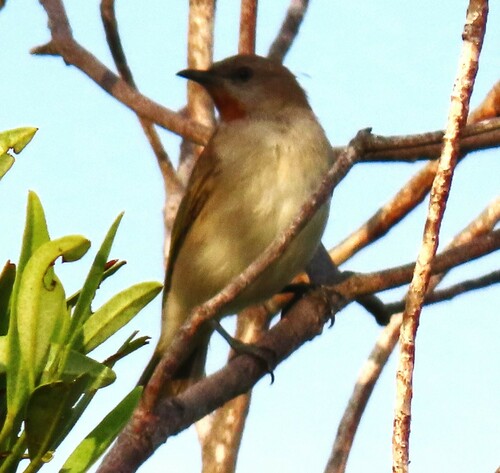 Rufous-throated Honeyeater
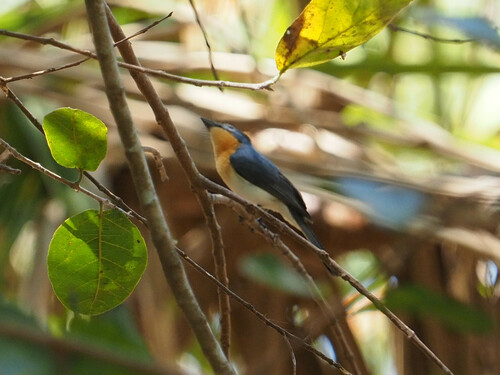 Broad-billed Flycatcher
In breve
La forma del becco è il modo più affidabile per distinguere queste specie: il Rufous-throated Honeyeater ha un becco snello e curvo tipico degli honeyeater, mentre il Broad-billed Flycatcher ha un becco più ampio e piatto adatto per catturare insetti. Entrambe le specie presentano colorazione rufous, ma la loro struttura complessiva e il comportamento alimentare differiscono significativamente.
Consigli di identificazione
- Forma del Becco: Cerca il becco snello e curvo del Rufous-throated Honeyeater rispetto al becco ampio e piatto del Broad-billed Flycatcher. 2. Comportamento Alimentare: Osserva le abitudini alimentari; gli honeyeater si nutrono spesso di nettare, mentre i flycatcher sono più insettivori. 3. Piumaggio: Nota la gola e il viso rufous dell'honeyeater rispetto al collare rufous del flycatcher.
Piumaggio
Entrambe le specie presentano colorazione rufous, ma il Rufous-throated Honeyeater ha una gola e un viso rufous più uniformi, mentre il Broad-billed Flycatcher può avere un collare rufous più contrastante.
Comportamento
Il Rufous-throated Honeyeater è più probabile che venga visto nutrirsi di nettare, mentre il Broad-billed Flycatcher cattura tipicamente insetti in volo.
Rufous-throated Honeyeater · Broad-billed Flycatcher · I miei uccelli difficili