
rufous-throated honeyeater vs monarca-de-bico-largo
Conopophila rufogularis versus Myiagra ruficollis
Jogue um quiz com rufous-throated honeyeater e monarca-de-bico-largo
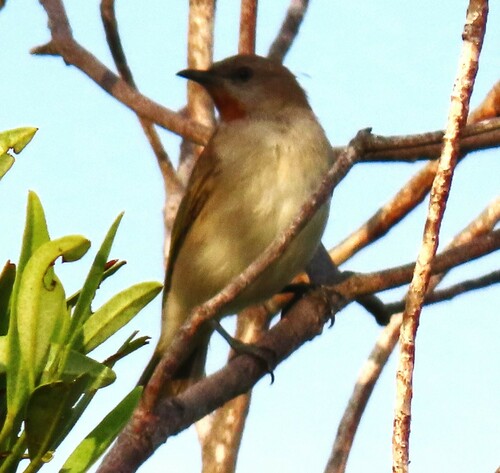 rufous-throated honeyeater
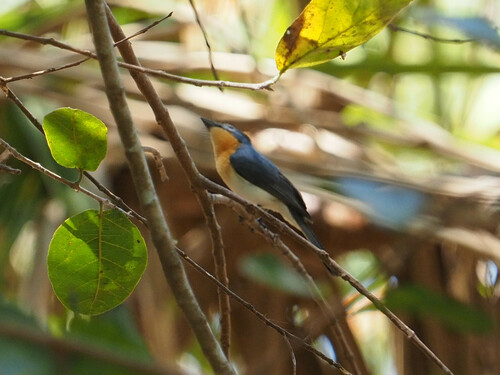 monarca-de-bico-largo
Em resumo
A forma do bico é a maneira mais confiável de distinguir essas espécies: o rufous-throated honeyeater tem um bico esguio e curvado, típico dos melífagos, enquanto o monarca-de-bico-largo tem um bico mais largo e plano, adequado para capturar insetos. Ambas as espécies têm coloração ruiva, mas sua estrutura geral e comportamento alimentar diferem significativamente.
Dicas de identificação
- Forma do Bico: Procure o bico esguio e curvado do rufous-throated honeyeater em comparação com o bico largo e plano do monarca-de-bico-largo. 2. Comportamento Alimentar: Observe os hábitos alimentares; os melífagos costumam se alimentar de néctar, enquanto os flycatchers são mais insetívoros. 3. Plumagem: Note a garganta e o rosto ruivos do melífago em comparação com o colar ruivo do flycatcher.
Plumagem
Ambas as espécies exibem coloração ruiva, mas o rufous-throated honeyeater tem uma garganta e rosto ruivos mais uniformes, enquanto o monarca-de-bico-largo pode ter um colar ruivo mais contrastante.
Comportamento
O rufous-throated honeyeater é mais propenso a ser visto se alimentando de néctar, enquanto o monarca-de-bico-largo geralmente captura insetos em voo.
rufous-throated honeyeater · monarca-de-bico-largo · Minhas aves difíceis