Birdr

Rufous-throated Honeyeater vs Broad-billed Flycatcher

Conopophila rufogularis versus Myiagra ruficollis

Play a quiz with Rufous-throated Honeyeater and Broad-billed Flycatcher
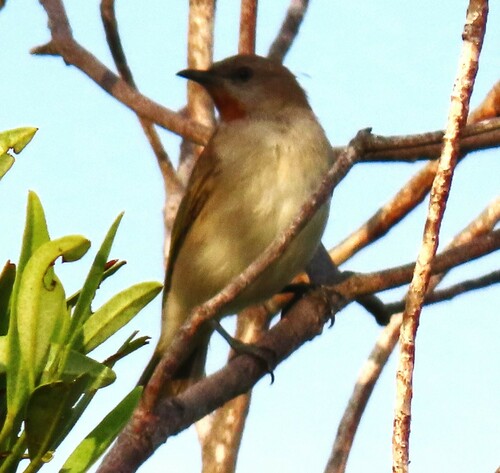
Rufous-throated Honeyeater (Conopophila rufogularis) Rufous-throated Honeyeater
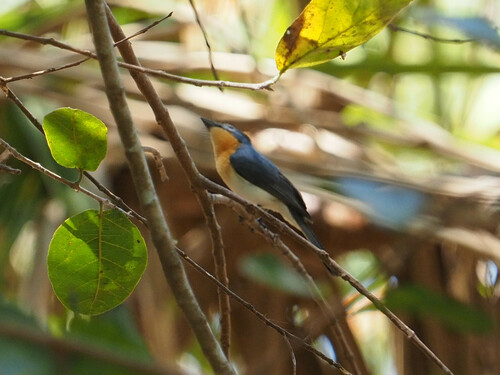
Broad-billed Flycatcher (Myiagra ruficollis) Broad-billed Flycatcher

Media

Loading…

In short

The Rufous-throated Honeyeater and the Broad-billed Flycatcher can be distinguished by their bill shape and habitat preferences. The honeyeater has a slender, curved bill suited for nectar feeding, while the flycatcher has a broader, flatter bill for catching insects. In the field, pay attention to their behavior and preferred environments.

Identification tips

Size

Both species are small passerines, but the Broad-billed Flycatcher is generally more robust in appearance due to its broader bill.

Plumage

The Rufous-throated Honeyeater has a distinctive rufous throat and a generally more uniform plumage. The Broad-billed Flycatcher also has rufous tones but is characterized by a more contrasting plumage with a distinct head pattern.

Behaviour

The honeyeater is often seen actively feeding on nectar and insects in flowering trees, while the flycatcher is more likely to be spotted sallying for insects from a perch.

Habitat

Rufous-throated Honeyeaters are typically found in open woodlands and along watercourses, whereas Broad-billed Flycatchers prefer mangroves and nearby forests.

Voice

Both species have distinctive calls, but the honeyeater's vocalizations are more melodic and complex compared to the simpler calls of the flycatcher.

Submit a better description

Use the same sections as the comparison. Your text is published immediately.

The Rufous-throated Honeyeater and the Broad-billed Flycatcher can be distinguished by their bill shape and habitat preferences. The honeyeater has a slender, curved bill suited for nectar feeding, while the flycatcher has a broader, flatter bill for catching insects. In the field, pay attention to their behavior and preferred environments.

  • Bill shape: Look for the slender, curved bill of the honeyeater versus the broad, flat bill of the flycatcher.
  • Habitat: Note the environment; honeyeaters are more common in open woodlands, while flycatchers prefer mangroves.
  • Behavior: Observe feeding behavior; honeyeaters are often seen feeding on nectar, while flycatchers sally for insects.
  • Plumage: Check for the rufous throat in honeyeaters and the contrasting head pattern in flycatchers.

Both species are small passerines, but the Broad-billed Flycatcher is generally more robust in appearance due to its broader bill.

The Rufous-throated Honeyeater has a distinctive rufous throat and a generally more uniform plumage. The Broad-billed Flycatcher also has rufous tones but is characterized by a more contrasting plumage with a distinct head pattern.

The honeyeater is often seen actively feeding on nectar and insects in flowering trees, while the flycatcher is more likely to be spotted sallying for insects from a perch.

Rufous-throated Honeyeaters are typically found in open woodlands and along watercourses, whereas Broad-billed Flycatchers prefer mangroves and nearby forests.

Both species have distinctive calls, but the honeyeater's vocalizations are more melodic and complex compared to the simpler calls of the flycatcher.

Discard your changes?

You have unsaved edits. If you leave now, those changes will be lost.

Rufous-throated Honeyeater · Broad-billed Flycatcher · My Tricky Birds