
Spotted Piculet vs Varzea Piculet
Picumnus pygmaeus contro Picumnus varzeae
Fai un quiz con Spotted Piculet e Varzea Piculet
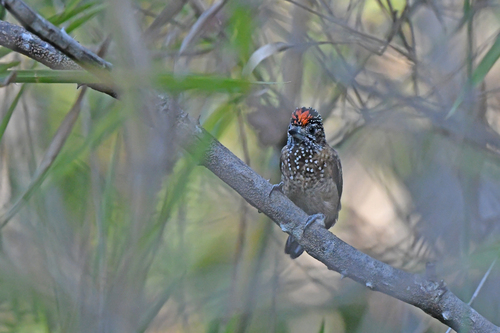 Spotted Piculet
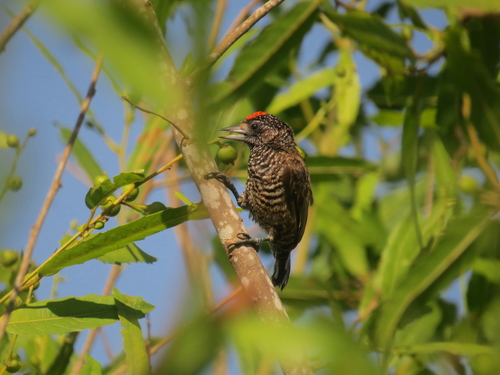 Varzea Piculet
In breve
Il segno di campo più affidabile tra Spotted Piculet e Varzea Piculet è il tono generale delle parti superiori e il motivo delle parti inferiori, specialmente nei giovani e negli uccelli in posa. Spotted Piculet è leggermente più grande e mostra un marrone più scuro e uniforme sopra con macchie nere e bianche prominenti sotto, mentre Varzea Piculet è più piccolo, ha un tono verde o marrone oliva nelle parti superiori e le sue parti inferiori mostrano spesso più barre o righe di punte nere e bianche, specialmente nei giovani. Entrambe le specie condividono un motivo simile del cappello nei maschi adulti, ma differenze sottili nel motivo della coda e nella qualità delle marcature delle parti inferiori aiutano a separarle. In volo, cerca il tono delle parti superiori e l'estensione del bianco nella coda.
Consigli di identificazione
- Motivo delle parti inferiori nei giovani: Il giovane Spotted Piculet mostra parti inferiori più opache ma ancora macchiate, mentre il giovane Varzea Piculet ha più barre o righe di punte nere e bianche. Cerca macchie (Spotted) rispetto a barre/righe (Varzea) sul ventre e sui fianchi.
- Tono delle parti superiori negli adulti: Spotted Piculet è marrone scuro sopra, mentre Varzea Piculet è marrone oliva scuro o verdastro. In buona luce, un tono più verde o oliva suggerisce Varzea.
- Parti inferiori degli adulti: Spotted Piculet ha grandi e audaci macchie nere e bianche su parti inferiori marroni a ruggine. Varzea Piculet mostra righe più sottili di punte nere e bianche, spesso dando un effetto barrato o a righe piuttosto che macchie discrete.
- Motivo del cappello (maschi): Entrambi hanno un cappello nero con una macchia rossa, ma il rosso di Varzea Piculet si estende più indietro sulla corona, mentre quello di Spotted Piculet è limitato alla fronte. Questo è sottile e potrebbe essere difficile da giudicare a meno che l'uccello non sia fermo e vicino.
- Motivo della coda: Entrambi hanno bianco sulla coda, ma Spotted Piculet mostra macchie bianche più grandi vicino alla fine delle penne esterne della coda, mentre Varzea Piculet ha una banda bianca più stretta. Questo è meglio visibile sugli uccelli in posa con code spiegate o in volo.
- Motivo del viso: Entrambi hanno un viso per lo più marrone scuro, ma quello di Spotted Piculet ha punte bianche su alcune piume, mentre quello di Varzea Piculet ha punte nere e bianche. Questa è una differenza minore e non sempre affidabile.
- Mento e gola: Il mento e la gola di Spotted Piculet sono neri e bianchi in un motivo variabile; quelli di Varzea Piculet sono marrone-neri con marcature bianche fini. Cerca una gola più uniforme e finemente marcata in Varzea.
- Differenze sessuali: Le femmine di entrambe le specie non hanno rosso sulla testa, quindi non fare affidamento su questo per la separazione delle specie.
- Becco e zampe: Solo i colori delle parti nude di Varzea Piculet sono descritti (becco nero con base blu-grigia, zampe grigie), ma questi non sono contrastati per Spotted Piculet e potrebbero non essere affidabili in campo.
- Dimensioni: Spotted Piculet è leggermente più grande (10 cm vs. 8–9 cm), ma questa è sottile e non sempre utile a meno che entrambe le specie siano presenti.
- Habitat: Nella varzea amazzonica (foresta allagata stagionalmente), Varzea Piculet è più probabile. In altri habitat brasiliani, Spotted Piculet è atteso.
- Viste in volo: In volo, cerca il tono generale delle parti superiori (marrone vs. oliva/verdastro) e il motivo del bianco nella coda (macchie più ampie in Spotted, bande più strette in Varzea).
- Usura e muta del piumaggio: I giovani di entrambe le specie differiscono dagli adulti, quindi fai attenzione con gli uccelli che mostrano marcature più opache o meno distinte—controlla per barre (Varzea) rispetto a macchie (Spotted).
- Trappole: Entrambe le specie possono apparire simili a un primo sguardo, specialmente femmine e giovani. Concentrati sul motivo delle parti inferiori e sul tono delle parti superiori come i segni di campo più consistenti.
- Non diagnostico: Non sono date differenze nelle vocalizzazioni o nel comportamento, quindi non utilizzare questi per la separazione.
Taglia
Spotted Piculet è leggermente più grande, con una lunghezza media di circa 10 cm (3.9 in), mentre Varzea Piculet è più piccolo a 8–9 cm (3.1–3.5 in). Questa differenza può essere sottile in campo ma può essere evidente se entrambi sono visti insieme o con riferimenti diretti alle dimensioni. Entrambi sono piccole picchi, ma Spotted Piculet può apparire un po' più robusto o con un becco più lungo, anche se le note non specificano differenze nel becco.
Piumaggio
- Giovani: I giovani Spotted Piculet sono più opachi degli adulti, con macchie meno distinte sotto, ma mostrano ancora grandi macchie nere e bianche sulle parti inferiori. I giovani Varzea Piculet sono simili agli adulti ma hanno più barre sulle parti inferiori, che possono apparire come righe di punte nere e bianche piuttosto che macchie discrete. Questa differenza nel motivo delle parti inferiori è spesso il miglior indizio negli uccelli immaturi.
- Adulti (maschi): Entrambi hanno un cappello nero con una macchia rossa sulla fronte, ma il rosso di Varzea Piculet si estende più indietro sulla corona. Le parti superiori di Spotted Piculet sono marrone scuro con punte nere e bianche, mentre quelle di Varzea Piculet sono marrone oliva scuro a verdastro, a volte con barre nere deboli. Le parti inferiori di Spotted Piculet sono di un marrone chiaro a scuro (spesso con sfumature ruggine) con grandi macchie nere e bianche; quelle di Varzea Piculet sono marroni o verdastro con punte nere e bianche in righe, dando un aspetto più a righe o barrato.
- Coda: Entrambe le specie hanno code scure con bianco sulle membrane interne della coppia più interna e macchie o bande bianche sulle coppie esterne, ma le macchie bianche di Spotted Piculet sono più prominenti, mentre quelle di Varzea Piculet sono bande più strette.
- Femmine: Entrambe mancano di rosso sulla fronte/corona ma seguono altrimenti le stesse distinzioni di pattern degli adulti maschi.
Comportamento
Non sono descritte differenze comportamentali diagnostiche nelle note. Entrambe le specie sono piccoli picchi attivi che probabilmente foraggiano in modi simili, e non sono notate differenze nello stile di volo o nel modo di foraggiare.
Habitat
Entrambe le specie sono endemiche del Brasile, ma Varzea Piculet è specificamente nota per la sua presenza nel bacino amazzonico, spesso associata a habitat forestali di varzea (allagati stagionalmente). Spotted Piculet è anch'essa endemica del Brasile ma non è specificato che sia limitata a habitat di varzea o amazzonici. Se la posizione è una foresta amazzonica allagata stagionalmente, Varzea Piculet è più probabile; altrove in Brasile, ci si aspetta Spotted Piculet.